

Disclosure: As an Amazon Associate, Nook and Nest Living earns from qualifying purchases made through links on this page, at no extra cost to you.
How to Declutter a Small Apartment: Room-by-Room Checklist
Learning how to declutter a small apartment is different from decluttering a house, because you have no spare room to hide the mess in while you decide. Every bag, box, and “maybe” pile sits in your living space, staring at you. This guide gives you a room-by-room method that works in small spaces: the order to follow, how long each room takes, the decision rules that end the dithering, and an exit system that gets donations out of your apartment before they become new clutter.
Quick Answer
- Start at the entryway. It takes about 30 minutes and the visible win makes the rest feel possible.
- Plan on 7 to 10 hours total, spread over a weekend in 25-minute sessions, not done in one exhausted day.
- Use four boxes: Keep, Donate or Sell, Trash or Recycle, and Relocate. No “maybe” pile, ever.
- Do not buy storage first. Declutter first, measure second, buy last, or you will store things you should have let go.
- Get donations out within a week, ideally within 24 hours, or they become furniture.
How to Declutter a Small Apartment Without Burning Out
The reason most small-apartment declutters fail is not laziness, it is decision fatigue. You open a drawer, pick up twenty objects, and make twenty hard choices in a row. Then you quit. The fix is structure: one room at a time, one category at a time, a timer running, and rules that decide for you. Work in 25-minute sessions with 5-minute breaks. When the timer goes off, stop, even mid-drawer. A finished entryway beats a half-gutted apartment every time.
Before you touch a single object, pick your donation drop-off day and put it in your calendar. In a small apartment the exit system matters more than the sorting system, because there is nowhere for bags to wait. We will come back to this at the end, but decide it now, before the first bag is full.
First, Do Not Buy Storage
This is the most expensive mistake in small-space decluttering. Buying bins, baskets, and organizers before you know what you are keeping means wrong sizes, wasted money, and neatly stored clutter you did not need anyway. Declutter first. Then measure: shelf depth, cabinet height, the gap under your bed, the gap beside the fridge. Keep those numbers in your phone. Only then buy, and only for what survived the purge. Your wallet and your shelves will both thank you.
3 Decision Rules That Make Every Choice Easy
1. The 12-month rule. If you have not used it in the last 12 months, it goes. A full year covers every season, so there is no “but winter” excuse left. The honest exceptions are safety items like a first aid kit, important documents, and basic tools like a plunger.
2. Would you buy it again today? Picture the item on a store shelf at full price. If you would not pay for it again, it does not deserve space you pay rent for. This rule is brutally effective on guilt-kept clothes, gifts, and decor.
3. One in, one out. Every new item that enters means a similar item leaves. This is the maintenance rule that matters most after the purge, and it works best when applied to fast-overflow categories: clothes, mugs, beauty products, and cables.
For a fast start, try the 12-12-12 challenge: find 12 items to donate, 12 to throw away or recycle, and 12 to return to their rightful place. It takes minutes, it builds momentum, and it proves to your brain that this is doable.

The Room-by-Room Method
Follow this order: entryway, kitchen, bathroom, bedroom and closet, living room, then clutter hotspots. It starts small and visible, tackles the hardest working rooms in the middle, and saves sentimental items for last, when your decision confidence is highest. Times below are planning estimates from room-by-room guides, not measured data, so treat them as targets.
1. Entryway (about 30 minutes)
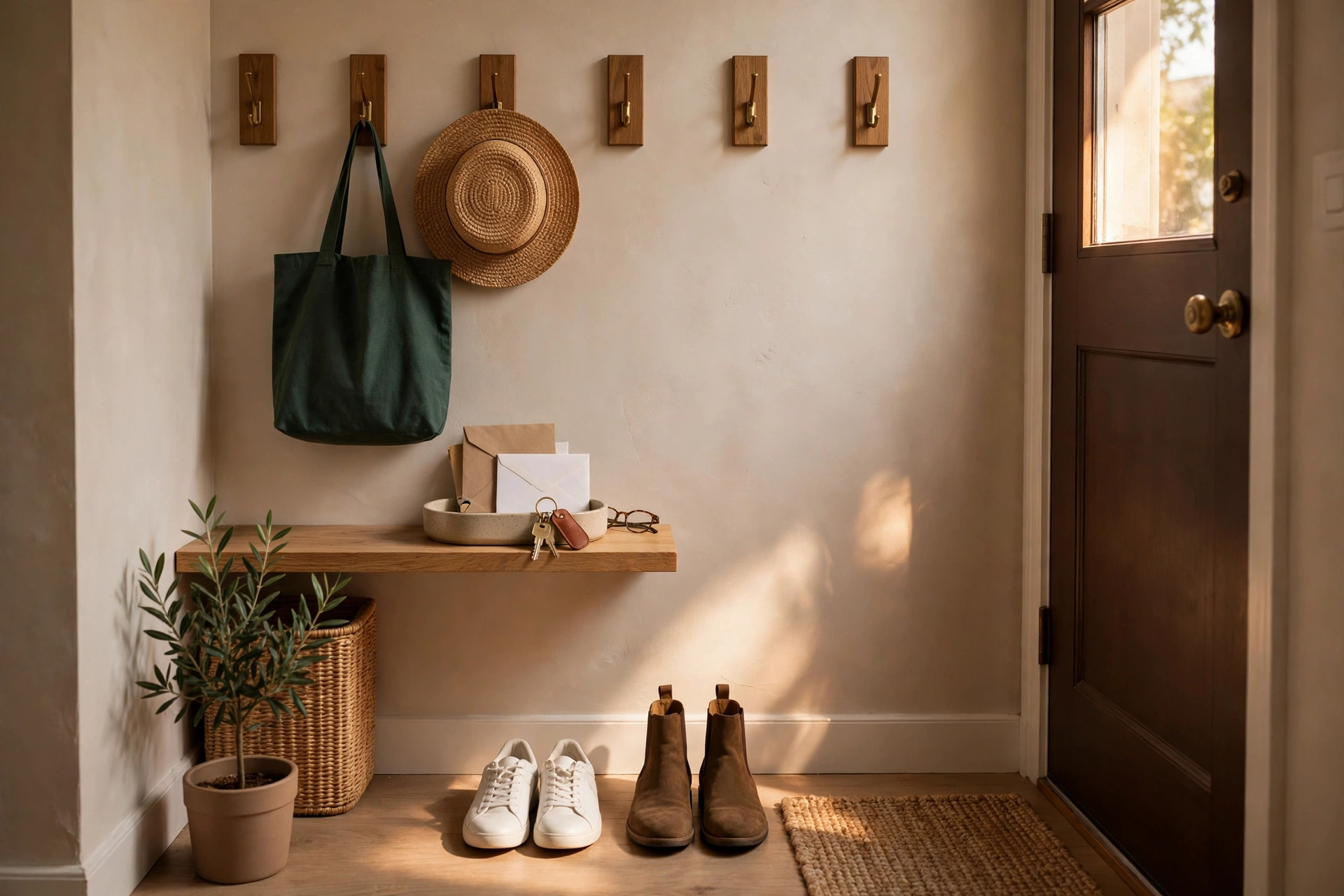
Pull everything off the floor, hooks, shelf, and bench. Limit: 2 pairs of shoes per person by the door, the rest go to the closet. Give keys and mail one landing spot, a small tray, and sort today’s mail before you finish. Quick win: clear the floor so the front door opens all the way. Mistake: adding more hooks before cutting down, which just displays more clutter. Renter note: over-the-door hooks need no holes. Adhesive hooks work for light bags and keys, but check the weight rating and remove them slowly, since they can pull paint. Heavy coats need a screwed-in rail, so ask your landlord first. If your apartment has no real entryway, just a door into the living room, this zone matters even more: only the shoes worn in a typical week live by the door, and a console 10 to 12 inches deep fits the tightest spots.
2. Kitchen (2 to 3 hours)
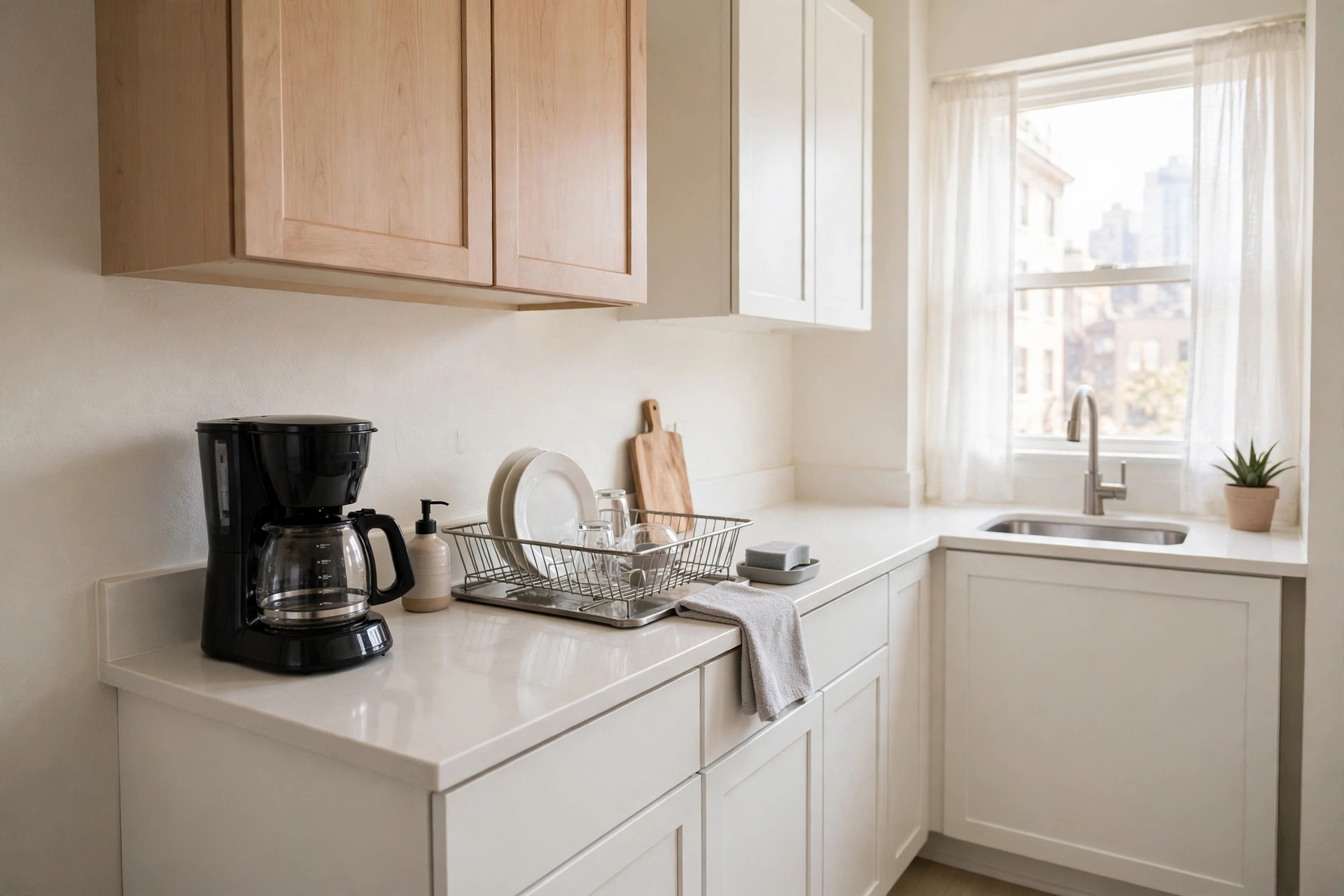
Clear the counters first: take everything off, wipe down, and put back only daily-use items like the coffee maker and dish rack. Then work through cabinets and the fridge by date, tossing expired food and spices and grouping the rest by type. Duplicates: keep one of each utensil, match food containers to lids, and toss lidless ones. Mug limit: 2 per person plus a few favorites. Quick win: counters down to daily-use items only. Mistake: keeping gadgets “for when I start cooking more.” If a gadget sat unused for 12 months, it goes. Renter note: do not donate anything that came with the unit, like a microwave or spare shelf pieces. Store those for move-out. For storage after the purge, stackable risers, under-shelf baskets, and turntables double usable shelf space, and a slim rolling cart fits the gap beside the fridge. Our small kitchen storage ideas for apartments with no pantry goes deeper on the storage side once your counters are clear.
3. Bathroom (about 45 minutes)
Empty the medicine cabinet and under-sink area completely. Toss expired sunscreen, old makeup, empty bottles, and products you tried and disliked. For medications, check the label or ask a pharmacist about take-back options instead of guessing, and never put them down the drain. Towel rule: 2 bath towels per person. Mistake: buying bulk toilet paper and shampoo for a one-cabinet bathroom. The overflow ends up on the floor, which is the opposite of organized. Renter note: keep pipes and shutoff valves under the sink clear so maintenance can reach them. Once the purge is done, our small bathroom storage ideas for renters covers the no-drilling storage that fits what is left.
4. Bedroom and Closet (2 to 3 hours)
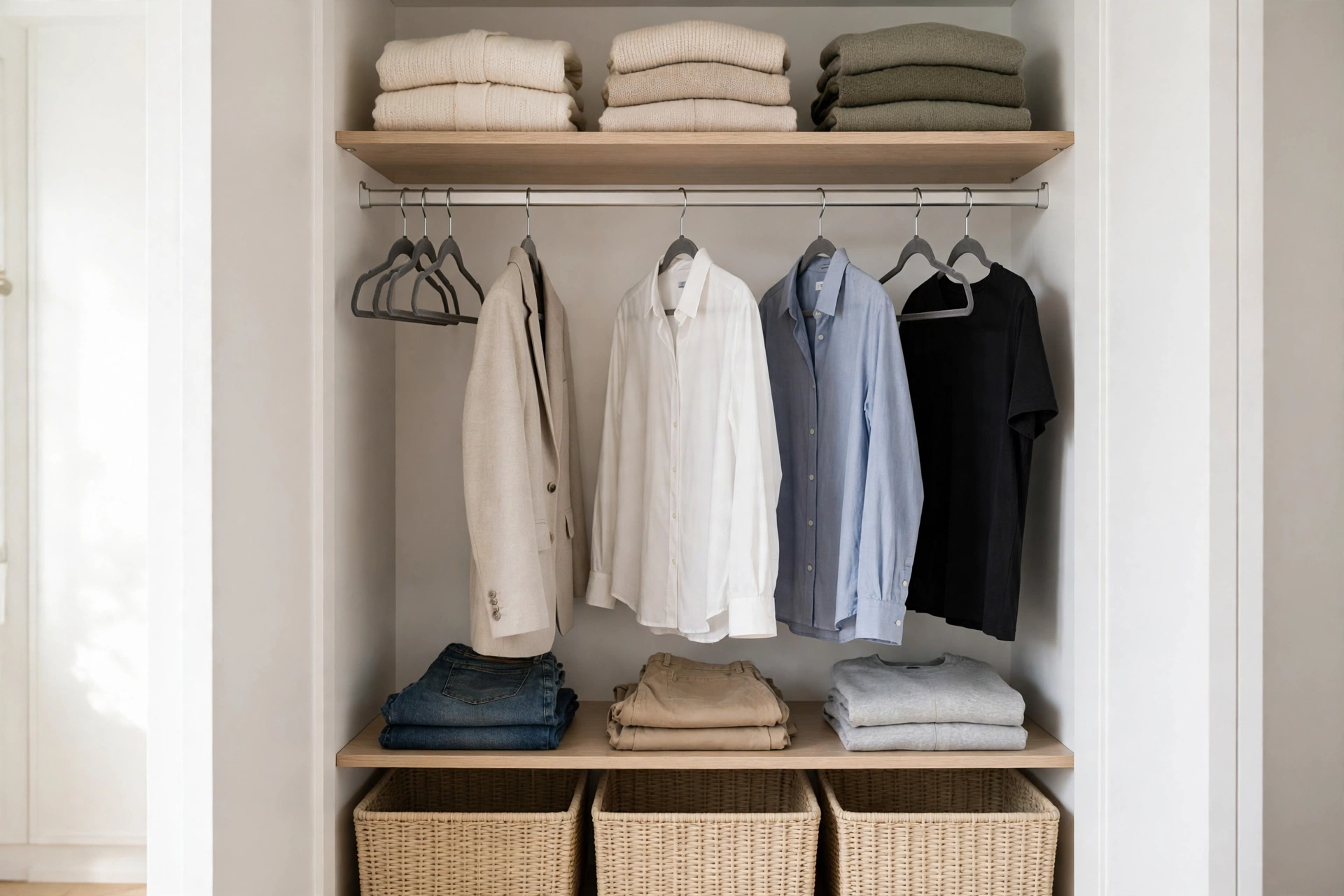
Clear the chair pile first: put away or wash everything draped over the chair or the floor. Then empty the closet one category at a time: tops, pants, dresses, shoes. Try on anything uncertain. If it does not fit, or you would not buy it again, it goes. For undecided clothes, turn the hangers backward. When you wear something, hang it normally. After 12 months, anything still backward goes. Mistake: keeping “someday” sizes. They cost you rod space every day for a future that rarely arrives. Renter note: a second rod or shelf usually means drilling, so ask first. A tension rod needs no holes but holds only light items. Slim non-slip hangers save real rod space, under-bed lidded containers take off-season clothes and bedding, and a nightstand with a drawer beats an open table. For off-season clothes, vacuum storage bags compress a surprising amount into one under-bed bin. Check the current price of Amazon Basics vacuum storage bags on Amazon. If your closet situation is more “no closet at all” than “messy closet,” our storage ideas for a small apartment with no closet is the companion guide.
5. Living Room (about 1 hour)
Clear every flat surface completely: coffee table, TV stand, side tables. Then put back no more than 2 decor items per surface. Keep books you will reread or reference. Toss remotes and cables for devices you no longer own. Check the floor: stacks, baskets, and extra side tables eat visual space fast. Mistake: hiding unsorted clutter in baskets. A basket of unsorted stuff is still clutter, just with a lid. Renter note: wall shelves need drilling, so a freestanding shelf is the no-holes answer. A storage ottoman, a coffee table with drawers, and a “reset basket” for stray items (emptied in the weekly reset) do the rest of the work.
6. Clutter Hotspots (1 to 2 hours, do these last)
Hotspots refill fastest, so they go last. Junk drawer: dump it out, toss broken pens, mystery keys, and dried tape, set dead batteries aside for recycling, and put back only what you reach for. Drawer dividers stop it refilling. Paper pile: four stacks, act on, file, shred, recycle. Shred anything with account numbers. Keep your lease, renter’s insurance, and tax documents in one folder. Under the bed: pull everything out, toss what you forgot you owned, and store the rest in lidded under-bed bins. Sentimental items: do these absolutely last. One box for photos and letters, sorted only after every other room is done. A useful trick is to photograph an item before donating it, which makes letting go noticeably easier, and keep one or two standout pieces instead of the whole collection.
The Printable Checklist
Copy this list, print it, and tick rooms off as you finish them. It is the whole method on one page.
- Entryway: floor clear, 2 pairs of shoes per person, keys and mail tray set, door opens fully
- Kitchen: counters down to daily use, expired food tossed, duplicates cut to one, mugs at 2 per person, lids matched
- Bathroom: expired products tossed, medications set aside for take-back, towels at 2 per person, under-sink clear
- Bedroom and closet: chair pile gone, backward-hanger test running, “someday” sizes donated, off-season stored under bed
- Living room: flat surfaces at 2 decor items max, orphan remotes and cables tossed, reset basket in place
- Hotspots: junk drawer divided, paper in four stacks, under-bed binned with lids, sentimental box limited to one
- Exit: donation bags out within a week, sell pile listed with a 2-week deadline, trash and recycling out the same day
Pick Your Schedule: Weekend Blitz vs 30-Day Plan
Two schedules fit how to declutter a small apartment around a real life. Pick one, and do not mix them halfway through.
Weekend blitz. Saturday: entryway (30 minutes), kitchen (2 to 3 hours), bathroom (45 minutes). Sunday: bedroom and closet (2 to 3 hours), living room (1 hour), hotspots (1 to 2 hours). Total 7 to 10 hours across two days, in 25-minute sessions. Do not attempt the whole apartment in one day. You will run out of energy by the kitchen, and the bedroom will never happen.
30-day plan. One area or category per day, about 20 minutes per session: clothes one day, books the next, kitchen utensils after that. Low daily commitment, and it suits anyone who cannot spare a weekend. A middle path also works: 15 minutes a day on one small area, Monday entryway floor, Tuesday one kitchen drawer, Wednesday medicine cabinet, Thursday chair pile, Friday coffee table, Saturday junk drawer, repeating with a new spot in each room until the apartment is covered within a few weeks.
Getting It Out Without a Car
This is where small-apartment declutters actually succeed or fail. A donation bag left in a bedroom corner becomes permanent storage within days. Set hard deadlines: trash and recycling out the same day, donation bags out within a week at the latest, ideally within 24 hours, and anything listed for sale gets 2 weeks, after which unsold items go to donation. Sell only what is worth the time: furniture, small appliances, brand-name clothing.
Without a car, your fastest routes are neighborhood gift groups: Buy Nothing Project groups and Freecycle, where neighbors collect from your porch, often the same day for a decent lamp or a box of kitchenware. Free charity pickups that come to you include Salvation Army and Vietnam Veterans of America (small furniture and household goods only, one-person-carry items). Dialing 211 connects you to local shelters and programs furnishing apartments right now, some of which send volunteers with a truck. Inside your building, a lobby note or building group chat moves furniture faster than any app. For small bags, thrift store drop-off works, and unopened shelf-stable food can go to a community fridge or food pantry. For things that are not donations at all, use the right stream: electronics, batteries, and cords go to city e-waste drop-off, worn-out clothes that cannot be donated go to textile recycling bins, and worn towels are accepted by animal shelters as rags.
Keeping It Gone
A full declutter is usually only needed once. What keeps it gone is a small set of habits. Every night, a 10-minute reset with a timer, putting back everything out of place. In a small apartment, 10 minutes usually covers every room. Every week, a 30-minute reset on the same day: empty the reset basket, clear the entryway and sort mail, reset kitchen counters and check the fridge, clear the chair pile and nightstand, sweep the bathroom, and pick next week’s problem spot. Every month, a 20-minute mini-declutter of one area. Every season, a quick review of the pantry, closet, bathroom backups, and cable bin. And the rule that ties it together: when a container is full, edit the category instead of letting overflow migrate to surfaces. Add a 24 to 48 hour wait before impulse buys, and filter clutter at the door: mail over the recycling bin, a donation bag kept in the closet and filled continuously, dropped off when full.
Studio Zones and Roommate Rules
In a studio, think in zones instead of rooms: entry, kitchen, sleeping area, living area, in the same order. Give the bed extra attention, since it is visible from everywhere: make it, clear the nightstand, and keep only 1 to 2 items on top. A rug or open bookcase marks the bedroom zone without blocking light. If you share the apartment, only declutter your own belongings and your share of shared spaces. Agree on basics first, like how many mugs stay out and where mail goes, and try a shared 30-minute session where each person handles their own things. Decluttering someone else’s stuff is the fastest way to start an argument and the slowest way to finish a declutter.
Mistakes That Undo a Declutter
- Doing the whole apartment in one day and quitting halfway
- Buying storage before decluttering
- Letting donation boxes sit past a week
- Keeping gifts out of guilt (a gift did its job when it was given)
- Decluttering other people’s things
- Starting with sentimental items, the hardest category, when your decision energy is lowest
- Keeping cords and chargers you cannot identify (if you do not know what it charges, recycle it)
How to Declutter a Small Apartment FAQs
Where should I start decluttering a small apartment?
Start with the entryway. It is small, about 30 minutes, and the visible win makes the kitchen and closet feel easier. High-traffic areas also show improvement daily, which keeps motivation up for the bigger rooms.
How long does it take to declutter a small apartment?
Plan on roughly 7 to 10 hours total, spread over one or two weekends in 25-minute sessions. How to declutter a small apartment fast is the wrong question: steady sessions beat one exhausting day, because decision fatigue is what actually stops people.
How do I declutter when I feel overwhelmed?
Pick one surface, not one room. Set a 15-minute timer and stop when it goes off. Small finished tasks build more motivation than one big unfinished one, and a cleared coffee table tonight is worth more than a half-gutted apartment this weekend.
What should I remove first when decluttering?
Visible trash and broken items first, for fast momentum. Then obvious duplicates, then unused items. Sentimental and “just in case” items go last, when your decision confidence is built up from a dozen easy wins.
How often should I do a full declutter after the initial one?
A full declutter is usually only needed once. A monthly audit and a weekly 5-minute reset keep things tidy. If a cabinet overflows, do a quick session immediately rather than waiting for the next scheduled one.
How do I organize a small apartment with no storage?
Declutter first so you are storing less, then use hidden spaces: under the bed, backs of doors, above closet rods, gaps beside appliances. Storage furniture like ottomans, cube shelves, and rolling carts fills in for built-ins. For rentals, over-door organizers, tension rods, removable adhesive hooks within their weight limits, freestanding shelving, and under-bed containers all add storage without damage. If your bedroom also needs the bed itself to store things, our cabinet beds for renters guide covers freestanding beds with storage built in.
Final Thoughts
How to declutter a small apartment comes down to three habits, not one heroic weekend: decide fast with rules instead of feelings, get everything out on a deadline, and reset a little every day so it never piles up again. Start at the entryway tonight, just 30 minutes, and let that one clear floor convince you the rest is possible. And remember the timing: publish this kind of guide before the new year, because January is when decluttering searches surge every year, and a home that is already decluttered is a much calmer place to start one.
Further reading: The Flex Cult room-by-room declutter guide and Ducks in a Row room-by-room strategy.