Disclosure: As an Amazon Associate, Nook and Nest Living earns from qualifying purchases made through links on this page, at no extra cost to you.
Best Raised Garden Beds for Small Backyards
Finding the best raised garden beds for small backyards is less about buying the biggest bed you can afford and more about matching the bed to the patch of ground you actually have. A bed that is too wide eats your walkway, a bed that is too shallow starves your tomatoes, and a bed that holds 36 cubic feet of soil can quietly double your budget once you fill it. This guide fixes all three mistakes before you spend anything: how to measure your space, how deep each crop really needs, how much soil each bed takes, and then 10 beds that earn their place in a small yard, on a patio, or on a balcony.
Quick Answer
- Start with the footprint, not the plant list. Measure your space, leave room to walk around the bed, and only then pick a size.
- Keep beds 4 feet wide or narrower so you can reach the middle from either side without stepping on the soil.
- Depth decides what you can grow. Herbs and lettuce manage in 6 to 8 inches, most vegetables want 12 to 18 inches, and carrots and parsnips want 18 to 24 inches.
- Budget for the soil, not just the bed. A 6 by 3 by 2 foot bed holds about 36 cubic feet of soil, which is roughly 18 bags of a 2 cubic foot mix.
- On concrete or a patio, choose a closed bottom or add a liner. Open bottom beds belong on soil, where roots can grow down and water can drain away.
- Build in fall and winter so you are ready for spring. Beds bought and built now are planted the moment the weather turns, instead of arriving after planting season has started.
The 10 Picks at a Glance
| Pick | Size | Depth | Soil | Best for |
|---|---|---|---|---|
| Vego Garden 17 inch Modular | Configurable, up to about 9.5 by 2.5 feet | 17 inches | Up to about 34 cubic feet | Odd shaped yards, buy once |
| Land Guard 4 by 2 by 1 foot | 4 by 2 feet | 12 inches | 7.14 cubic feet | First bed, tight budget |
| Land Guard 6 by 3 by 2 foot, 2 pack | 6 by 3 feet each | 24 inches | 36 cubic feet each | Deep roots, two beds at once |
| SnugNiture 4 by 2 by 1 foot, 2 pack | 4 by 2 feet each | 12 inches | About 8 cubic feet each | Starter pair, matching look |
| Best Choice Products 6 by 3 by 2 foot | 6 by 3 feet | 24 inches | 269 gallons (36 cubic feet) | First serious vegetable bed |
| Greenes Fence Premium 2 by 4 foot cedar | 2 by 4 feet | 10.5 inches | 7 cubic feet | Natural wood look |
| Best Choice Products 48 by 24 by 30 inch elevated | 4 by 2 feet, 30 inches tall | About 10 inches of soil | 5 cubic feet | Patios, less bending |
| Best Choice Products 72 by 24 by 30 inch elevated | 6 by 2 feet, 30 inches tall | About 10 inches of soil | 8.4 cubic feet | Long patio or fence line |
| Keter Urban Bloomer | 32.3 by 14.7 inches, 30.7 inches tall | About 12 inches of soil | 12.7 gallons | Self watering, small patios |
| FOYUEE wheeled planter | 40.5 by 15.7 inches, 31.5 inches tall | 8 inches | 2.5 cubic feet | Balconies, moving for sun |
What Makes the Best Raised Garden Beds for Small Backyards Different
Most raised bed roundups rank beds for big suburban yards, where a 4 by 8 foot bed is a starter size and nobody asks where the soil bill lands. The best raised garden beds for small backyards answer a different set of questions: does it fit through the gate, does it leave a path to walk on, can one person build it in an afternoon, and does the soil to fill it cost more than the bed itself. Every pick below is judged on those questions first, and on growing performance second, because a bed you cannot place, fill, or reach will not grow anything no matter how good its reviews look.
Measure First, Buy Second
Take a tape measure outside before you open any product page. Measure the patch where the bed will sit, then subtract the walking space. You need room to stand beside the bed, kneel, carry a watering can, and wheel a barrow past it. A bed pushed against a fence on three sides looks tidy and grows badly, because you can only reach it from one side.
The width rule is simple and worth obeying: keep ground level beds 4 feet wide or narrower, so you can reach the center from either side without stepping into the bed. Stepping on the soil compacts it, and compacted soil is exactly what a raised bed is supposed to prevent. Length is flexible, which is why modular kits and 2 packs are so useful in small yards: two 4 by 2 foot beds with a path between them grow more, and more comfortably, than one awkward 4 by 8 foot block crammed against a wall.
Before you order, clear the spot. If the patch is full of stored pots, old furniture, or a decade of clutter, our room by room declutter guide covers the same clear first, measure second, buy last order that saves money here too. A bed ordered for a space you have not cleared yet usually ends up leaning against the garage until spring.
For more ideas on making a small patio work harder once the beds are in, see our best deck boxes for small patios, which covers the storage side of the same small outdoor space.
How Deep Should a Raised Bed Be
Depth is the spec most buyers ignore and most plants punish. Shallow soil dries out fast, heats up fast, and stops roots short. This table is the honest version, built from what growers actually recommend:
| What you want to grow | Soil depth you need |
|---|---|
| Herbs, lettuce, salad greens, strawberries | 6 to 8 inches |
| Peppers, beans, cucumbers, squash | 12 to 18 inches |
| Tomatoes, broccoli, eggplant | 12 to 18 inches, deeper is better |
| Carrots, parsnips, potatoes, sweet potatoes | 18 to 24 inches |
One rule softens all of this: if the bed sits on open soil, roots can grow past the bottom of the bed into the ground below, so a 12 inch bed on soil grows more than the same bed on concrete. On concrete, a patio, or a balcony, the bed is the whole root zone, so go deeper, at least 18 inches for anything beyond herbs and greens.
Metal, Wood, or Resin: the Honest Trade Offs
Galvanized metal is the low maintenance winner. It does not rot, it does not warp, and makers rate good ones at 15 to 20 plus years. The trade offs are real: metal edges warm the soil beside them in hot sun, which helps in cool springs and hurts in heat waves, and thin panels can bow outward under a full load of wet soil unless the kit includes support bars. Look for thicker panels, rounded safety edges, and stabilizing bars on any bed longer than 4 feet.
Wood, especially cedar, looks better in most yards and insulates soil better than metal, so roots stay cooler in summer. The price is maintenance: untreated wood silvers with age and eventually rots, and fir beds need a weather resistant sealant or stain about once a year to last. Cedar resists rot naturally and lasts longer than fir, which is why it costs more.
Resin and plastic will not rust or rot, and self watering resin planters are genuinely useful for people who forget to water. The catch is depth: most resin planters are shallow, so they suit herbs, greens, and flowers better than tomatoes or carrots.
Ground Level or Elevated
Ground level beds hold more soil, grow deeper roots, and stay put in wind. They need level ground and some bending, and once filled they are essentially permanent. Elevated beds on legs fix the bending problem and work on patios, decks, and balconies where nothing can touch the ground, but they hold far less soil, so they limit you to shallow rooted crops, and a filled elevated bed is too heavy to move, wheels or not. Choose elevated for comfort and hard surfaces, ground level for serious vegetable growing.
The Soil Bill Nobody Warns You About
Soil is the hidden cost of every raised bed, and it surprises first time buyers more than any other part. The formula is simple: length times width times depth, all in feet, equals cubic feet of soil. Bagged mixes usually come in 2 cubic foot bags, so divide by 2 for a bag count. Here is what that means for the beds in this guide:
| Bed | Soil needed | 2 cubic foot bags, roughly |
|---|---|---|
| Land Guard 4 by 2 by 1 foot | 7.14 cubic feet | 4 bags |
| SnugNiture 4 by 2 by 1 foot, each | About 8 cubic feet | 4 bags |
| Greenes 2 by 4 foot cedar | 7 cubic feet | 4 bags |
| Best Choice 48 by 24 by 30 inch elevated | 5 cubic feet | 3 bags |
| Best Choice 72 by 24 by 30 inch elevated | 8.4 cubic feet | 5 bags |
| Keter Urban Bloomer | 12.7 gallons (about 1.7 cubic feet) | 1 bag |
| FOYUEE wheeled planter | 2.5 cubic feet | 2 bags |
| Vego 17 inch, biggest layout | About 34 cubic feet | 17 bags |
| Best Choice 6 by 3 by 2 foot | 36 cubic feet | 18 bags |
| Land Guard 6 by 3 by 2 foot, 2 pack | 72 cubic feet total | 36 bags |
Two ways to cut that bill without hurting your plants. First, for deep beds, fill the bottom third with sticks, leaves, and straw before adding soil on top; the material breaks down slowly and the roots reach it as it does. Second, start with one bed, not three. A single full bed you actually tend beats three half filled beds every time.
The 10 Best Raised Garden Beds for Small Backyards
Every bed below is judged the same way: does it fit a small space, does its depth match real crops, is its soil bill sane, and what is the honest catch. Links go to the product page so you can check the current price, since prices move and a printed price goes stale fast.
1. Vego Garden 17 Inch 10 in 1 Modular Metal Raised Bed: Best Overall
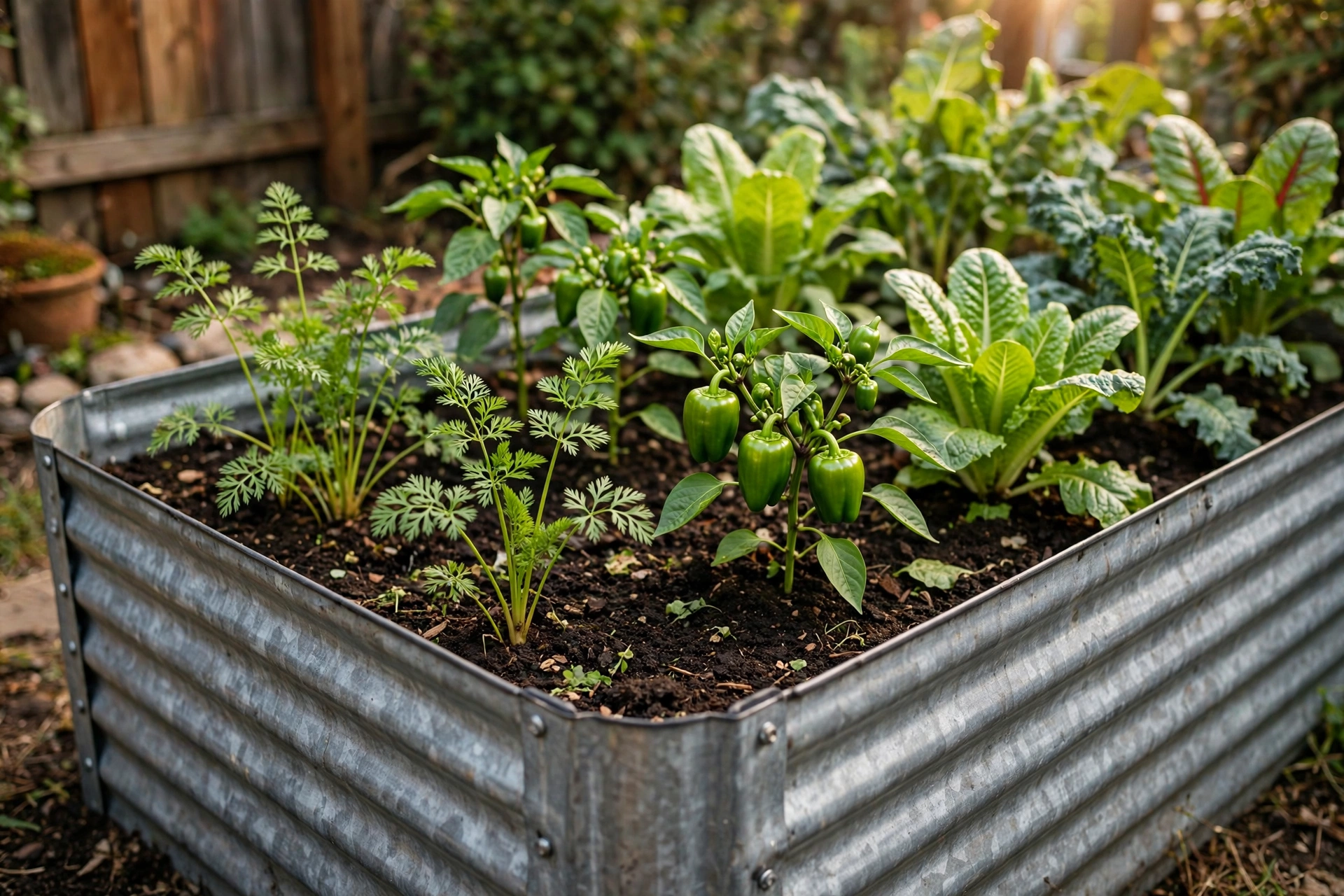
If your yard is an awkward shape, a narrow strip along a fence, or a corner that no rectangle fits well, this is the bed to buy first. One kit builds 10 different configurations, including long narrow runs and L shapes, so the bed bends to your yard instead of the other way around. At 17 inches deep it handles tomatoes, peppers, and most vegetables comfortably, and the oval profile has no sharp corners, with a rubber safety strip over the top edge.
The material is Vego’s coated Aluzinc steel, which the maker says lasts 20 plus years and survives far longer than plain galvanized steel or treated wood. That claim is the reason this bed costs more than a basic metal kit: you are paying for the last bed you buy for that spot, not the cheapest one. The biggest layout holds about 34 cubic feet of soil, so check the soil table above before you pick a configuration, not after.
Best for: odd shaped yards, renters who may reconfigure later, gardeners who want one premium bed instead of replacing cheap ones. Watch out: the kit has more panels and hardware than a fixed bed, so assembly takes longer and the instructions deserve a careful read.
Check the price of the Vego Garden 17 Inch Modular Raised Bed on Amazon
2. Land Guard 4 by 2 by 1 Foot Galvanized Raised Bed: Best Budget Starter
This is the bed to buy when you are not sure raised bed gardening is for you yet. At 4 by 2 feet it fits almost anywhere, including a side yard or a small patio corner, and its 7.14 cubic feet of soil costs about 4 bags to fill, so the whole project stays cheap. Amazon lists it as a Choice product with 6,000 plus bought in the past month, which is about as strong a popularity signal as a budget bed gets.
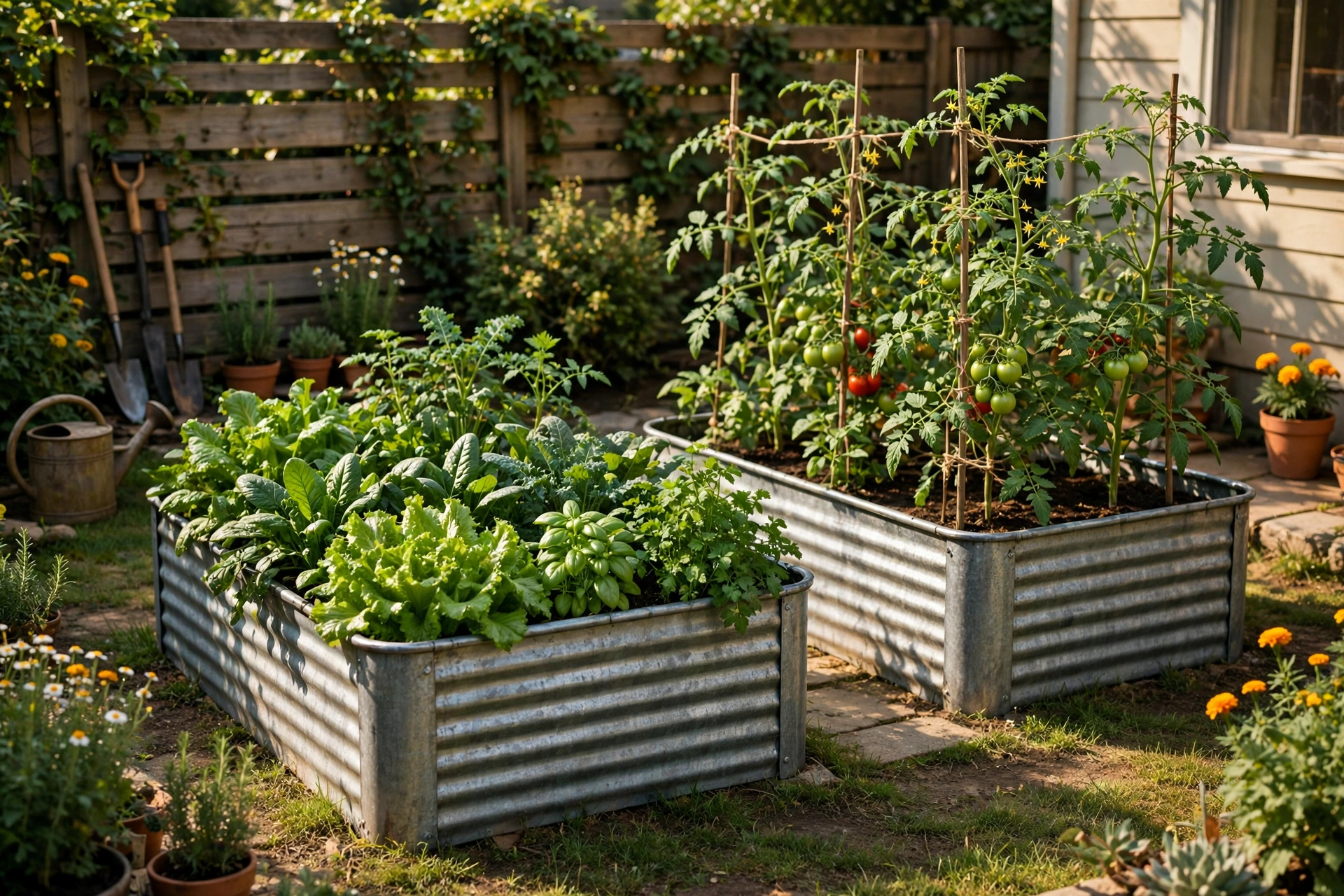
The panels are double layer galvanized steel in an oval shape, which resists bowing better than flat panels, and the open bottom gives good drainage on soil. At 12 inches deep it suits herbs, lettuce, greens, strawberries, and peppers, but it is not a carrot bed. Buy it to learn on, then add a second one or a deeper bed once you know what you actually like growing.
Best for: first beds, small budgets, renters testing a sunny patch. Watch out: 12 inches is a ceiling, not a starting point, so do not expect deep root crops to thrive in it.
Check the price of the Land Guard 4 by 2 by 1 Foot Raised Bed on Amazon
3. Land Guard 6 by 3 by 2 Foot Galvanized Beds, 2 Pack: Best Deep Root Pair
Two beds, 24 inches deep each, is the fastest way to a serious vegetable garden in a small yard. The depth handles carrots, parsnips, potatoes, and sweet potatoes properly, and the open bottoms let roots keep going into the ground below. Two beds also let you rotate crops: brassicas in one, roots in the other, then swap next season, which is the simplest pest and disease habit a small garden can have.
The honest cost is soil: 36 cubic feet per bed, 72 total, which is roughly 36 bags of mix. That is a real budget line, so price the soil before you order, and use the sticks and leaves trick in the bottom third to cut it. The galvanized panels are the same double layer steel as the smaller Land Guard, and the oval shape helps the long sides hold their shape when full.
Best for: vegetable gardeners with ground space for two beds, root crop lovers, crop rotation. Watch out: these belong on soil, not concrete, and two filled beds are permanent, so place them once and place them well.
Check the price of the Land Guard 6 by 3 by 2 Foot 2 Pack on Amazon
4. SnugNiture 4 by 2 by 1 Foot Galvanized Beds, 2 Pack: Best Starter Pair
Two matching 4 by 2 foot beds with a path between them is the classic small yard layout, and this pair is built for exactly that. Each bed holds about 8 cubic feet of soil, the panels are 0.5 millimeter galvanized steel with an eco friendly coating that keeps plant roots from touching bare metal, and the bottomless frame drains freely on soil.
Why a pair instead of one bigger bed? Reach. Two narrow beds mean every plant is within arm’s length, weeding takes minutes, and if one bed has a pest problem the other is untouched. It also looks intentional in a way a single bed floating in a yard does not, which matters when the garden is also the view from your kitchen window.
Best for: matching pairs flanking a path, beginner vegetable gardens, small yards that need structure. Watch out: like every 12 inch bed, this is for shallow to medium roots, not a deep root garden.
Check the price of the SnugNiture 4 by 2 by 1 Foot 2 Pack on Amazon
5. Best Choice Products 6 by 3 by 2 Foot Metal Raised Bed: Best First Serious Bed
If you want one bed that grows almost everything and you have a 6 by 3 foot patch of ground, this is the sweet spot. The 24 inch depth holds 269 gallons of soil, about 36 cubic feet, which covers tomatoes, broccoli, beans, carrots, and everything in between. The powder coated steel panels assemble without tools, using wingnuts and bolts with rubber edging for safety, and two inner stabilizing bars plus four ground stakes keep the long sides from bowing when the bed is full and wet.
The open base is a feature, not a missing part: it lets roots grow into the ground below and makes the bed a natural compost layering box, since you can layer yard waste and food scraps under the soil. Just remember the soil bill, about 18 bags, and mulch the edges in hot climates, because metal walls warm the outer soil faster than wood does.
Best for: a first serious vegetable bed, deep root crops, gardeners who want tool free assembly. Watch out: it has no bottom panel, so it needs open soil underneath, and a full bed is heavy enough that you will not be moving it.
Check the price of the Best Choice Products 6 by 3 by 2 Foot Metal Raised Bed on Amazon
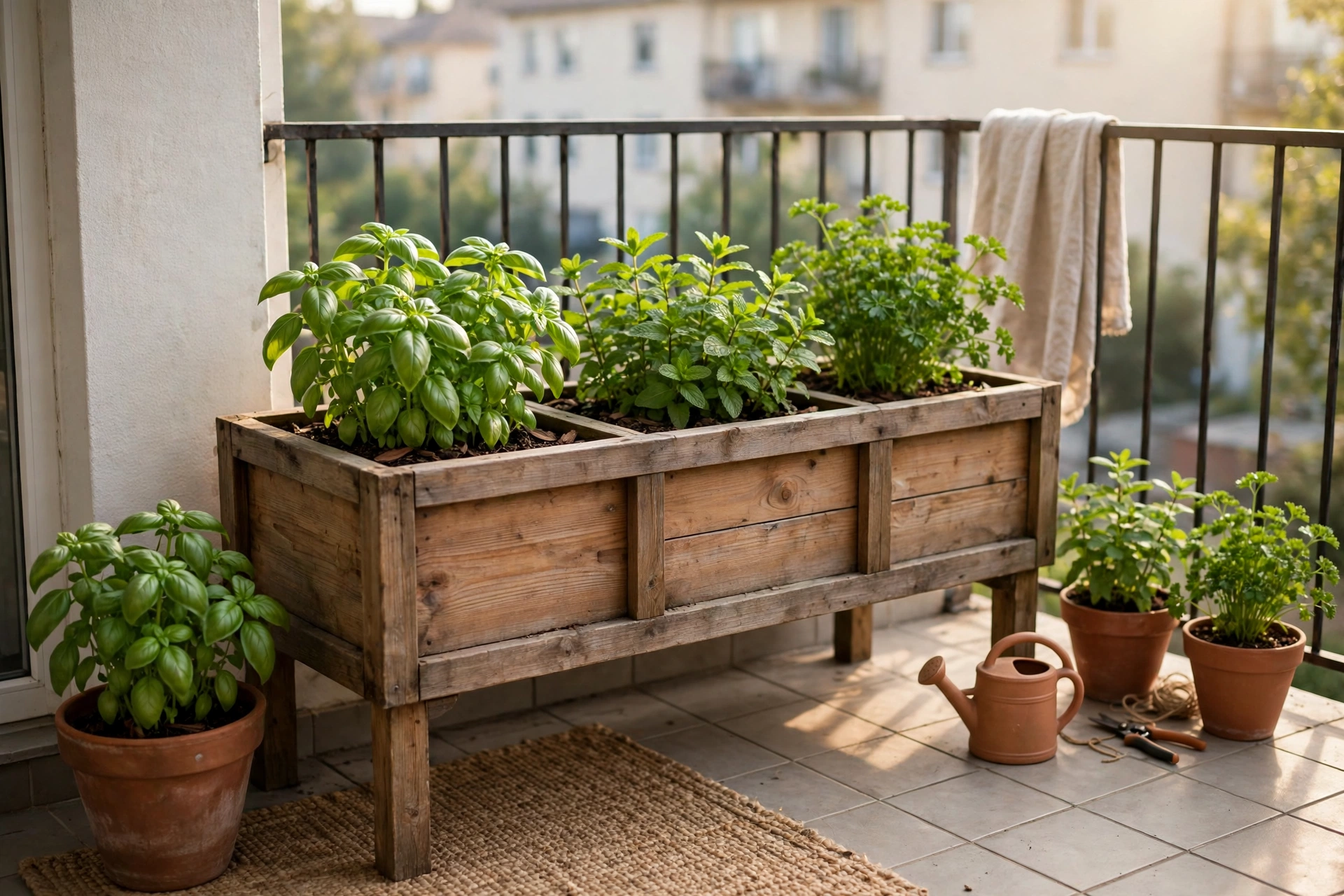
6. Greenes Fence Premium 2 by 4 Foot Cedar Raised Bed: Best Natural Wood
Some yards just look wrong with a metal box in them, and this is the bed for those yards. Greenes builds it from untreated North American cedar, 3/4 inch thick boards with dovetail joints that slide into corner posts without tools, so assembly takes minutes and there are no chemicals in the wood touching your food. Left untreated it ages to a silver gray patina, which suits most gardens better than a painted finish.
At 2 by 4 feet and 10.5 inches deep it holds 7 cubic feet of soil, which is herbs, greens, peppers, and flowers territory, not deep roots. The routed corner posts let you stack a second kit on top for more depth later, or connect kits side by side into a longer run, which is the cheapest upgrade path in this whole guide.
Best for: traditional garden looks, organic growing, gardeners who may expand later. Watch out: cedar lasts longer than fir but it is still wood, so expect it to weather and eventually wear, and seal it if you want to slow that down.
Check the price of the Greenes Fence Premium 2 by 4 Foot Cedar Raised Bed on Amazon
7. Best Choice Products 48 by 24 by 30 Inch Elevated Wood Planter: Best Patio Bed
This is the bed for patios, decks, and anyone whose knees object to ground level gardening. At 30 inches tall you tend it standing up, the closed bottom works on hard surfaces where an open bed cannot go, and the included liner separates soil from the fir wood while three drainage holes keep water from pooling. It holds 5 cubic feet of soil and is rated to 200 pounds, which is plenty for herbs, greens, strawberries, and flowers.
The closed bottom is the feature that matters most here. Most ground beds fail on patios because soil washes out and water stains the surface; this one is designed for that exact spot. Seal the fir about once a year and it will last far longer than an unsealed one, since fir is the wood that most needs that habit.
Best for: patios, decks, balconies with solid floors, gardeners who want less bending. Watch out: the soil is about 10 inches deep, so keep it to shallow rooted crops, and seal the wood annually.
Check the price of the Best Choice Products 48 by 24 by 30 Inch Elevated Planter on Amazon
8. Best Choice Products 72 by 24 by 30 Inch Elevated Wood Planter: Best Long Elevated Bed
Same idea as the bed above, stretched to 6 feet for a fence line, a long patio wall, or a deck rail. You get 8.4 cubic feet of soil, a divider panel that lets you grow two different things with different watering needs in one bed, six legs for stability, six drainage holes, and a 300 pound capacity. At 30 inches tall it is just as kind to backs and knees, and it doubles as a low privacy screen when the plants fill in.
The catch buyers report is that this one ships without a liner, unlike its smaller sibling, so add a liner before you fill it, or the soil will sit directly against the fir. Assembly is a two person job at this length, and the center joint needs care to line up, so do not rush that step.
Best for: long patios, fence lines, gardeners who want one big elevated bed instead of two small ones. Watch out: buy a liner with it, and plan on two people for assembly.
Check the price of the Best Choice Products 72 by 24 by 30 Inch Elevated Planter on Amazon
9. Keter Urban Bloomer: Best Self Watering Planter
The Urban Bloomer is for the gardener who forgets to water, travels, or just wants herbs without a daily chore. Its resin body holds 12.7 gallons of soil, will not rust or rot, and is UV protected so it does not fade in sun. The built in reservoir and water gauge tell you when the plants actually need water, and a drainage tap lets you empty excess water or bring the planter indoors without a trail of drips.
At 32.3 by 14.7 inches it fits a patio corner, a balcony, or beside a grill, and the wood look exterior blends with patio furniture better than bare metal. The limit is depth and volume: this is an herb, greens, and flower planter, not a tomato bed, and one bag of mix fills it.
Best for: forgetful waterers, herb gardens, small patios, apartment living. Watch out: shallow soil means shallow roots, so do not ask it to grow deep vegetables.
Check the price of the Keter Urban Bloomer on Amazon
10. FOYUEE Wheeled Raised Planter: Best Balcony Bed
Balconies have two problems no other space has: weight limits and moving sun. This planter answers both. It is a galvanized steel box on legs with wheels, 40.5 by 15.7 inches overall and 31.5 inches tall, holding 2.5 cubic feet of soil, so it is light enough for most balconies and rolls to follow the sun across the day. A lower shelf holds tools or spare pots, and a central drainage hole keeps water from pooling in the roots.
The honest trade offs are the ones that come with light steel: the panels are thin, so handle them with care during assembly, the legs can wobble on uneven surfaces unless you shim them, and 8 inches of soil depth limits you to herbs, small greens, and flowers. For a balcony herb garden that is exactly the right brief, and many people buy two or three and line them along a railing.
Best for: balconies, narrow patios, renters who need to move the garden for sun or storms. Watch out: place it on a flat hard surface, shim the legs if it rocks, and keep it to shallow crops.
Check the price of the FOYUEE Wheeled Raised Planter on Amazon
3 Small Backyard Layouts That Actually Work

Layout 1: The pair and the path. Two 4 by 2 foot beds with an 18 to 24 inch path between them. This is the layout for most small yards: everything is reachable, the path keeps your shoes clean, and the pair looks designed instead of improvised. Use the Land Guard or SnugNiture pairs here.
Layout 2: The L shape. One Vego modular kit bent into an L along a fence corner. The L turns a dead corner into growing space and leaves the middle of the yard open for a table or a grill. This is the layout for yards that are long and narrow, or L shaped themselves.
Layout 3: The balcony line. Two or three FOYUEE planters, or a Keter plus a FOYUEE, lined along a railing. Wheels let you chase the sun through the seasons, and the narrow depth keeps the weight sane. Grow herbs and greens here, and keep the tomato ambitions for a ground level bed somewhere else.
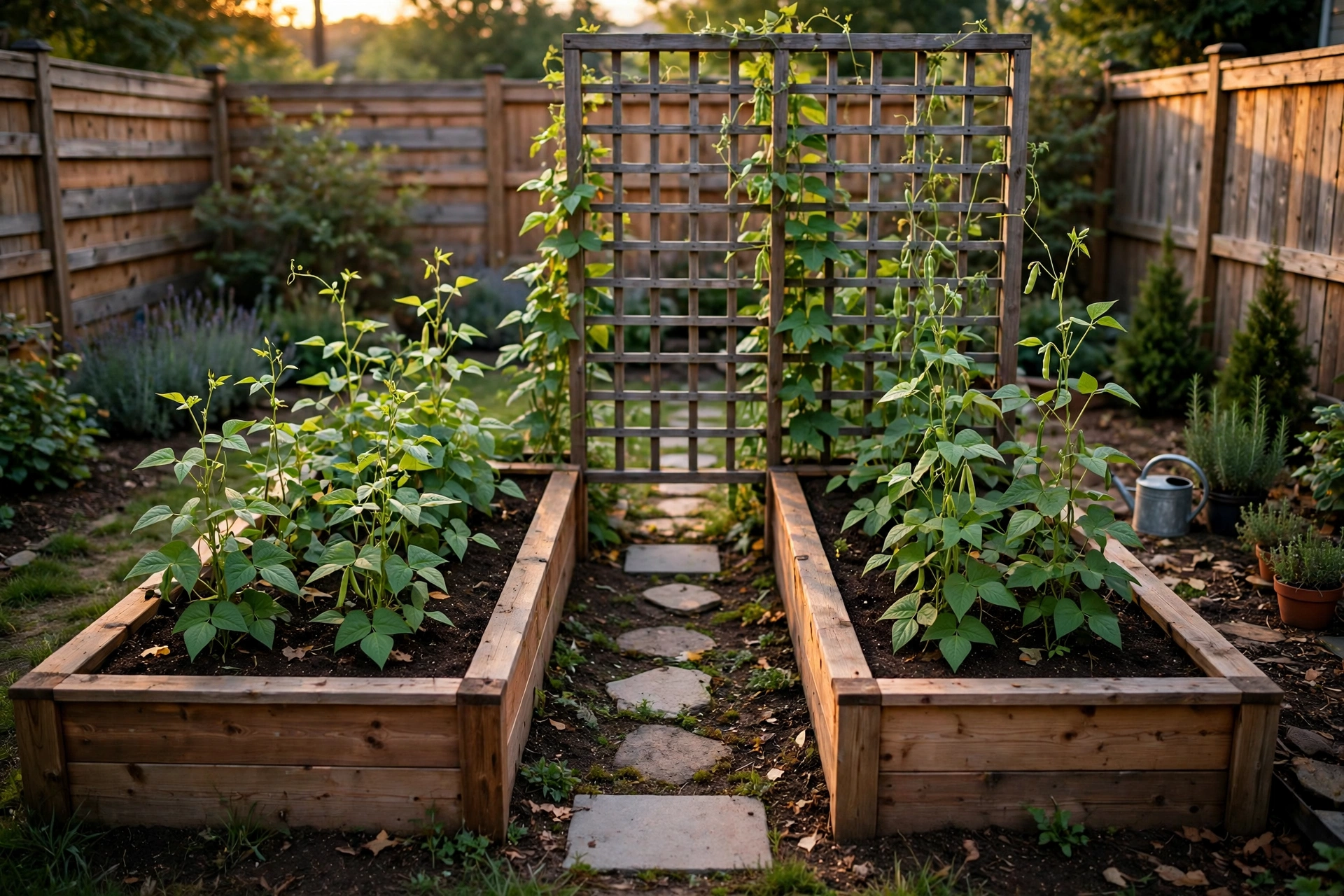
Whichever layout you pick, add one vertical element. A trellis at the back of a bed grows beans, peas, or cucumbers upward, which is free growing space in a yard that has none to spare, and it shades the soil behind it in summer.
Frequently Asked Questions
What size raised bed is best for a small backyard?
For most small backyards, a 4 by 2 foot bed, or a pair of them, is the sweet spot. It fits through gates, leaves room for a path, and holds enough soil for a real harvest without a huge soil bill. If you have a 6 foot run of open ground, a 6 by 3 foot bed is the next step up. Go wider than 4 feet only if you can reach the bed from both sides, or the middle becomes dead ground.
How deep should a raised bed be for vegetables?
Herbs and lettuce manage in 6 to 8 inches, most vegetables including tomatoes and peppers want 12 to 18 inches, and carrots, parsnips, and potatoes want 18 to 24 inches. On open soil, roots can grow past the bottom of the bed, so a 12 inch bed on soil outperforms the same bed on concrete. On concrete or a patio, treat the bed depth as the whole root zone and go deeper.
Are metal or wood raised beds better?
Metal wins on lifespan and maintenance: galvanized steel does not rot and good kits last 15 to 20 plus years, but metal warms soil edges in hot sun and thin panels can bow. Wood wins on looks and soil insulation, but it needs sealing and eventually rots, with cedar outlasting fir. There is no wrong answer here, only a trade off to pick with your eyes open.
Can I put a raised bed on concrete or a patio?
Yes, with two conditions. First, the bed needs a closed bottom or a liner, so soil stays in and water drains in a controlled way instead of washing out. Second, check the weight: a filled bed is very heavy, and balconies have limits, so confirm yours before you order. Elevated planters and resin self watering planters are the safest choices for hard surfaces.
How much soil does a raised bed need?
Multiply length times width times depth, all in feet, and the answer is cubic feet. A 4 by 2 by 1 foot bed needs about 7 to 8 cubic feet, roughly 4 bags of a 2 cubic foot mix. A 6 by 3 by 2 foot bed needs about 36 cubic feet, roughly 18 bags. For deep beds, filling the bottom third with sticks and leaves before adding soil cuts the bill without hurting your plants.
When should I buy and build a raised bed?
Building in fall and winter is the smart move for spring planting, because the bed is ready the moment the weather turns and you are not competing with the spring rush for stock or delivery slots. Spring searches for raised beds peak in April and May, and garden content on Pinterest starts building from February, so a bed built now is also a garden that is already producing content and harvests while everyone else is still shopping.
Final Thoughts
The best raised garden beds for small backyards are not the biggest, the cheapest, or the prettiest in a photo. They are the ones that fit your patch of ground, match the depth your crops need, and cost an amount of soil you knew about before you ordered. Measure the space, pick the depth for what you actually want to eat, price the soil, and then choose from the 10 beds above with confidence. Start with one bed, fill it properly, and grow something in it this season. A single bed that feeds you beats a yard full of plans every time.