
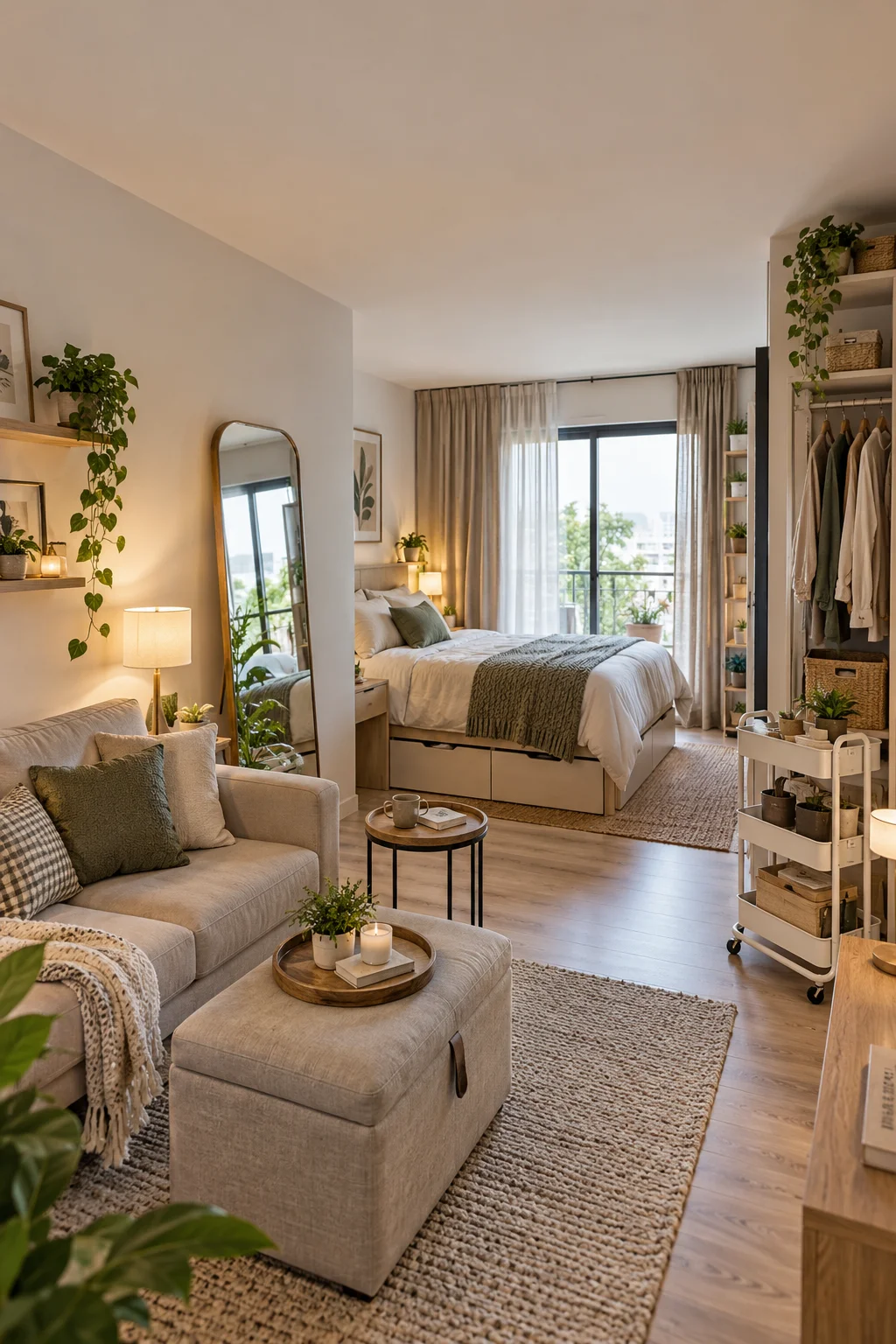
Living in a small apartment changes the way you shop for your home.
In a larger space, you can buy something because you like it and figure out where it goes later. In a small apartment, that approach catches up with you quickly. One extra chair can block the only comfortable walkway. A bulky organizer can take up more room than the things it was supposed to store. And a piece of furniture that looked perfect online can make the whole room feel cramped.
The best small apartment essentials aren’t necessarily the smallest things you can buy.
They’re the things that solve a real problem without creating another one.
Some add hidden storage. Some use vertical space. Others make one room more flexible so you don’t need separate furniture for every activity.
And you definitely don’t need to buy all of them.
Let’s look at nine practical essentials that can make a small apartment easier to organize, more comfortable to live in, and less cluttered.
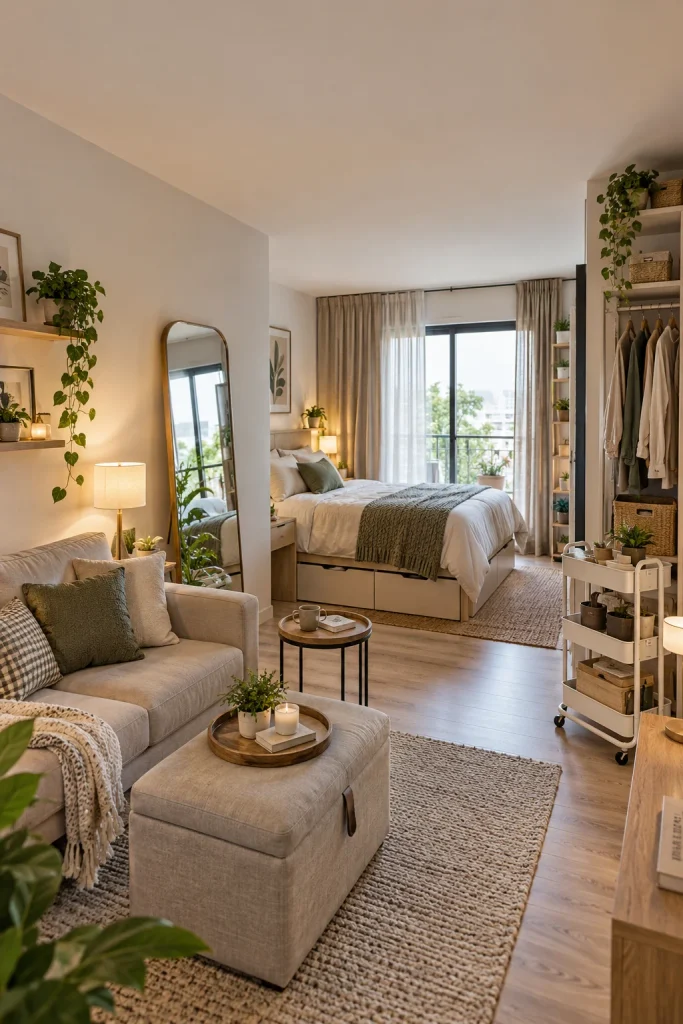
The first thing to notice is that none of these solutions requires you to completely redesign your apartment.
They’re mostly about making the space you already have work harder.
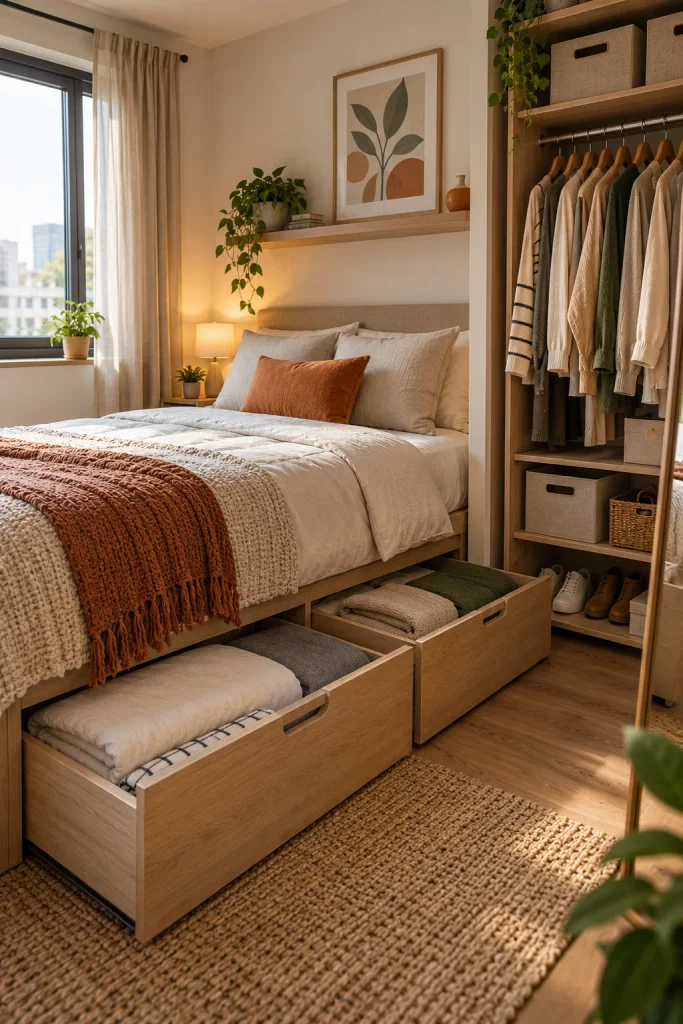
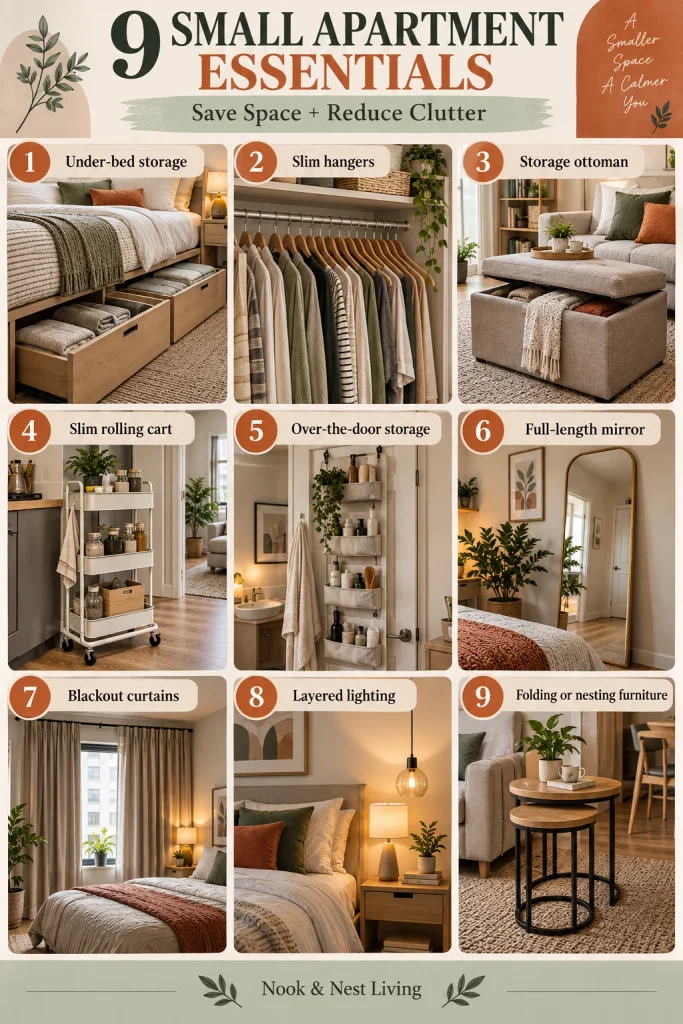
1. Under-Bed Storage
The space underneath your bed is one of the easiest storage opportunities to overlook.
You’re already using the floor area for your bed, so making the empty space underneath useful doesn’t require sacrificing another section of the room.
If you’re buying a new bed, a frame with built-in drawers can be especially practical. If you already have a bed you like, low rolling containers or shallow storage boxes can accomplish much the same thing.
Use this hidden space for things you don’t need every day:
- Extra bedding
- Seasonal clothing
- Shoes
- Bags
- Towels
- Spare linens
The important part is keeping it organized.
If everything gets pushed underneath the bed in random bags, you’ve technically created storage, but you’ve also created a future headache.
Use containers that are easy to pull out and group similar things together.
Small-space rule: Before buying another cabinet, look at the storage space you already have but aren’t using.
2. Slim Hangers
Closet space disappears surprisingly quickly when every hanger is thick and bulky.
Slim hangers are a simple swap that can give you more usable hanging space without changing the closet itself.
They’re particularly helpful if you have a narrow reach-in closet or a small wardrobe that is already close to capacity.
But there’s a catch.
Don’t use slimmer hangers as an excuse to keep clothes you never wear.
Start by removing anything that doesn’t fit, doesn’t get worn, or has simply been sitting untouched for years. Then organize what’s left.
That combination of decluttering and better-fitting hangers is much more effective than either one by itself.
3. Storage Ottoman
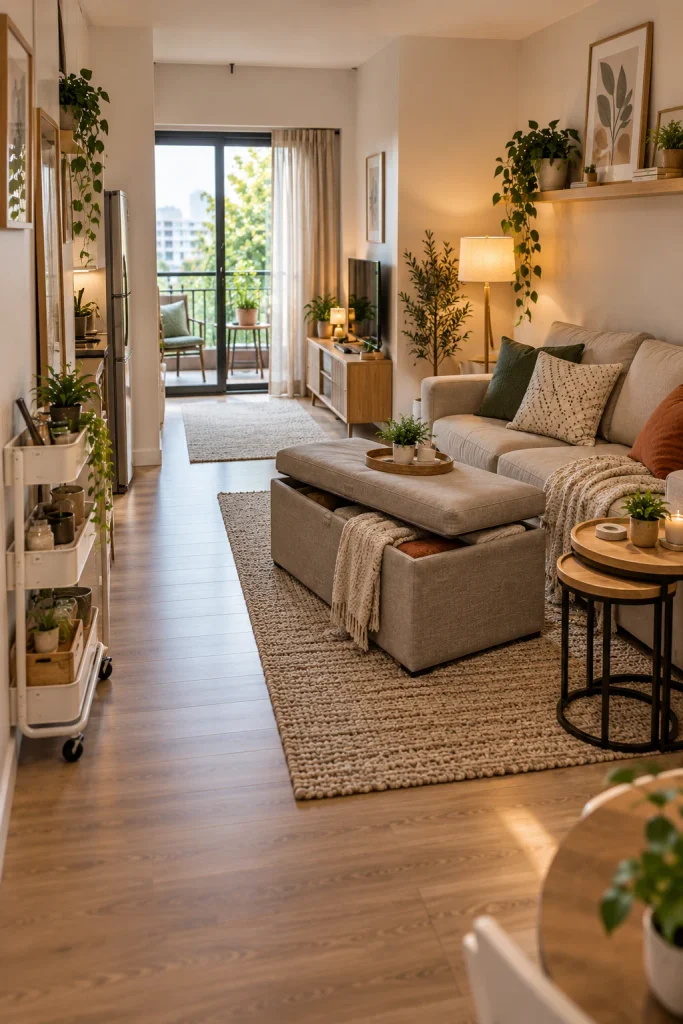
A storage ottoman can be surprisingly useful in a small living room because it can perform several jobs at once.
It can work as a footrest, extra seating, a small surface, and hidden storage depending on the design.
That means one appropriately sized piece may replace several separate items.
Use the inside for blankets, spare cushions, books, games, or other living-room items that tend to accumulate on visible surfaces.
Just pay attention to scale.
A huge ottoman isn’t automatically better because it holds more. If it blocks the walkway or makes it difficult to move around the sofa, you’ve created a new problem.
If your living room is especially tight, our guide to how to arrange a small living room without cramping it can help you figure out the layout before buying more furniture.
4. A Slim Rolling Cart
A rolling cart is useful because it doesn’t have to permanently belong to one room.
In the kitchen, it can hold coffee supplies or pantry items.
In the bathroom, it can become a toiletries station.
Beside a desk, it can hold work supplies.
Near a laundry area, it can keep cleaning products together.
That flexibility makes a narrow rolling cart particularly useful in apartments where your needs change from room to room.
Choose one that can fit beside existing furniture without blocking a walkway.
The goal isn’t to turn every empty gap into storage.
It’s to have one flexible piece that can adapt when your apartment needs change.
5. Over-the-Door Storage
The back of a door is easy to ignore, but it can become valuable storage in a small apartment.
It’s vertical space that often sits completely unused.
Depending on the room, an over-the-door organizer can hold:
- Shoes
- Accessories
- Hair tools
- Toiletries
- Cleaning supplies
- Small pantry items
- Household extras
Before installing one, check the door clearance. The organizer shouldn’t stop the door from closing properly or interfere with nearby furniture.
For renters, also check the installation method and your lease before using anything that requires permanent hardware.
And if you’re trying to solve a broader storage problem, our smart small apartment storage ideas guide covers more ways to use overlooked areas.
6. A Full-Length Mirror
A full-length mirror is more than a place to check an outfit.
In a small apartment, the right mirror can also influence how open and bright a room feels.
A mirror positioned near a window can reflect natural light and create more visual depth.
You don’t necessarily need an enormous decorative mirror either.
A slim leaning mirror can work against a wall, while a door-mounted option can save even more floor space.
Think about what the mirror reflects, not just where it fits.
A mirror facing a blank wall isn’t doing as much visually as one reflecting a window, light source, or attractive part of the room.
7. Blackout Curtains
Window treatments can have a surprisingly large effect on a small bedroom.
Blackout curtains can help control unwanted light, improve privacy, and make the sleeping area feel more comfortable.
They’re especially useful if your bedroom faces a bright street, parking lot, another building, or strong morning sunlight.
Choose curtains that properly cover the window rather than treating them as purely decorative panels.
For renters, choose an installation method that suits your lease and the existing window setup.
This is a good reminder that small-apartment essentials aren’t always about storage.
Sometimes making a small space work better means making it more comfortable to use.
8. Layered Lighting
One ceiling fixture shouldn’t have to do everything.
Small apartments often feel better when they have several smaller light sources that can be used independently.
A room might use:
- A floor lamp beside the sofa
- A small bedside lamp
- A desk lamp
- Under-cabinet lighting
- A compact accent lamp
You don’t need every option.
The idea is to create different levels of light for different activities.
Bright overhead lighting can be useful while cleaning or getting ready.
A smaller lamp can make the same room feel much calmer in the evening.
And because lamps are easy to move compared with furniture, they’re a simple way to change the atmosphere without consuming much space.
9. Folding or Nesting Furniture
This may be the most important category if your apartment has rooms that need to perform several jobs.
Your living room might also be your dining room.
Your dining table might become your workspace.
Your bedroom might need to accommodate a desk.
That’s where flexible furniture earns its place.
Consider:
- Nesting tables
- Drop-leaf tables
- Folding chairs
- Foldable desks
- Expandable dining tables
- Movable ottomans
The important part is choosing based on your actual routine.
If you eat at a dining table every day, a compact permanent table may be worthwhile.
If you only need a dining surface occasionally, a folding or expandable option may make more sense.
Don’t buy furniture for the lifestyle you think you should have.
Buy it for the lifestyle you actually live.
The 9 Small Apartment Essentials at a Glance
Don’t Buy All 9 at Once
This might be the most important advice in the entire article.
A list of small apartment essentials shouldn’t become a reason to go shopping for nine new things.
Start with the problem that’s bothering you most.
If your closet is overflowing, deal with that first.
If your living room has nowhere to put blankets and everyday clutter, look at multifunctional storage.
If your apartment feels dark and uncomfortable at night, lighting may make a bigger difference than another storage box.
And if you’re still figuring out how you actually use your space, wait.
Living in an apartment for a few weeks often reveals problems that weren’t obvious on move-in day.
5 Things I Would Skip in a Small Apartment
Not everything marketed as “space-saving” actually saves space.
1. Oversized accent furniture
A beautiful chair isn’t useful if it blocks the only practical walkway.
2. Too many decorative baskets
One or two can be helpful.
A collection of baskets containing things you don’t use is still clutter.
3. Organizers for things you should declutter
Storage doesn’t fix having too much stuff.
Sometimes the best organization solution is getting rid of the item.
4. Furniture for rare occasions
If you host overnight guests twice a year, you may not need a permanent guest setup taking up space every day.
5. Storage that blocks access
A cabinet isn’t helpful if opening it means moving another piece of furniture first.
Storage should make your routine easier, not create another step.
Before You Buy Anything for Your Small Apartment
There’s a simple way to avoid most bad small-space purchases.
Don’t ask:
“Is this designed for a small apartment?”
Ask:
“Will this make my particular apartment easier to live in?”
Those are very different questions.
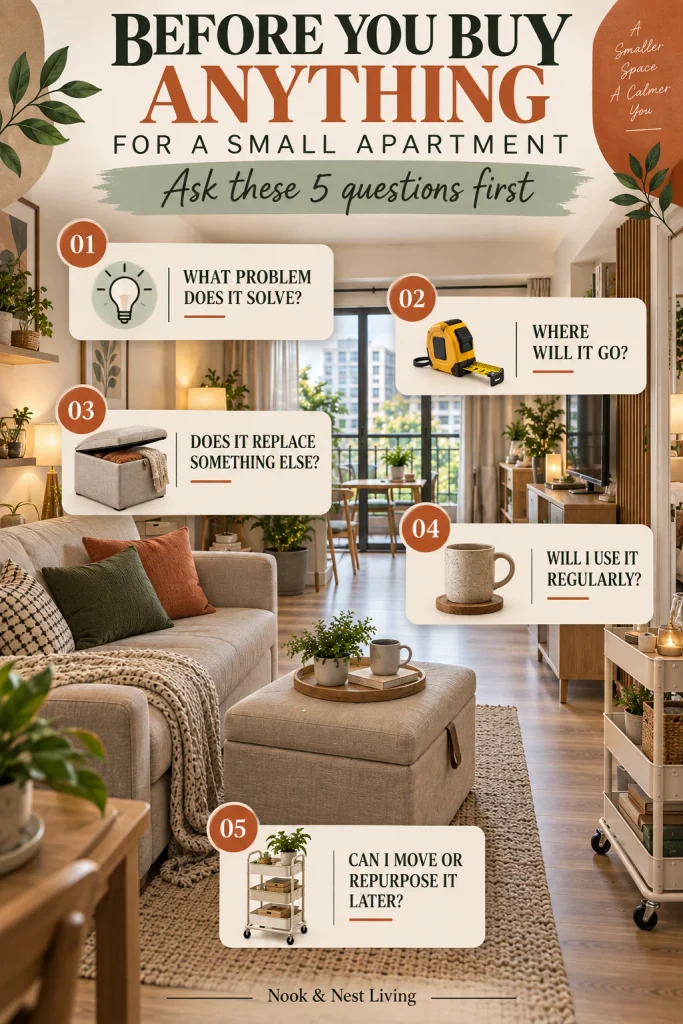
Before buying something, consider:
What problem does it solve?
Be specific.
Where exactly will it go?
Measure before ordering.
Does it replace something else?
Multifunctional pieces can be especially valuable.
Will I actually use it?
Daily-use items deserve more consideration than things you might use twice a year.
Can I move or repurpose it later?
This matters particularly for renters.
A Simple Small Apartment Shopping Rule
Before bringing something home, give it a job.
If it stores something, know what it will store.
If it’s furniture, know how you’ll use it.
If it’s decorative, know where it will go.
If it claims to save space, measure it.
And if you can’t explain why you need it, leave it for now.
Small apartments don’t become comfortable because every corner is filled with something useful.
They become comfortable when the useful things and the empty space work together.
Final Thoughts
The best small apartment essentials aren’t the products that promise to magically create more square footage.
They’re the pieces that make the square footage you already have work better.
Under-bed storage uses hidden space. Slim hangers make a small closet easier to manage. A storage ottoman combines functions. A rolling cart can move wherever you need it. Flexible furniture lets one room perform several jobs.
But there’s another part of small-space living that’s just as important:
You don’t have to fill every available space.
Clear walkways matter.
Open floor area matters.
A little visual breathing room matters.
So before buying another “space-saving” product, look around your apartment and ask what problem you’re actually trying to solve.
Sometimes the answer is a new piece.
Sometimes it’s reorganizing something you already own.
And sometimes the smartest small-apartment essential is buying nothing at all.
FAQ
What are the best small apartment essentials?
Useful options include under-bed storage, slim hangers, storage ottomans, rolling carts, over-the-door organizers, full-length mirrors, blackout curtains, layered lighting, and folding or nesting furniture.
What should I buy first for a small apartment?
Start with the problem that affects your everyday life most. Prioritize functional needs such as storage, lighting, seating, and furniture that fits your routine before buying decorative pieces.
How can I reduce clutter in a small apartment?
Declutter first, then organize what remains. Use hidden and vertical storage where practical, keep walkways clear, and avoid buying organizers for things you don’t actually need.
Is multifunctional furniture worth it for a small apartment?
It can be, especially when one appropriately sized piece replaces two or more separate items. Storage ottomans, nesting tables, folding desks, and expandable furniture are useful examples.
What should renters consider before buying storage?
Check measurements, door clearance, installation requirements, and your lease. Products that require drilling or permanent modifications may not be appropriate for every rental.
3 thoughts on “9 Small Apartment Essentials That Save Space and Reduce Clutter”