
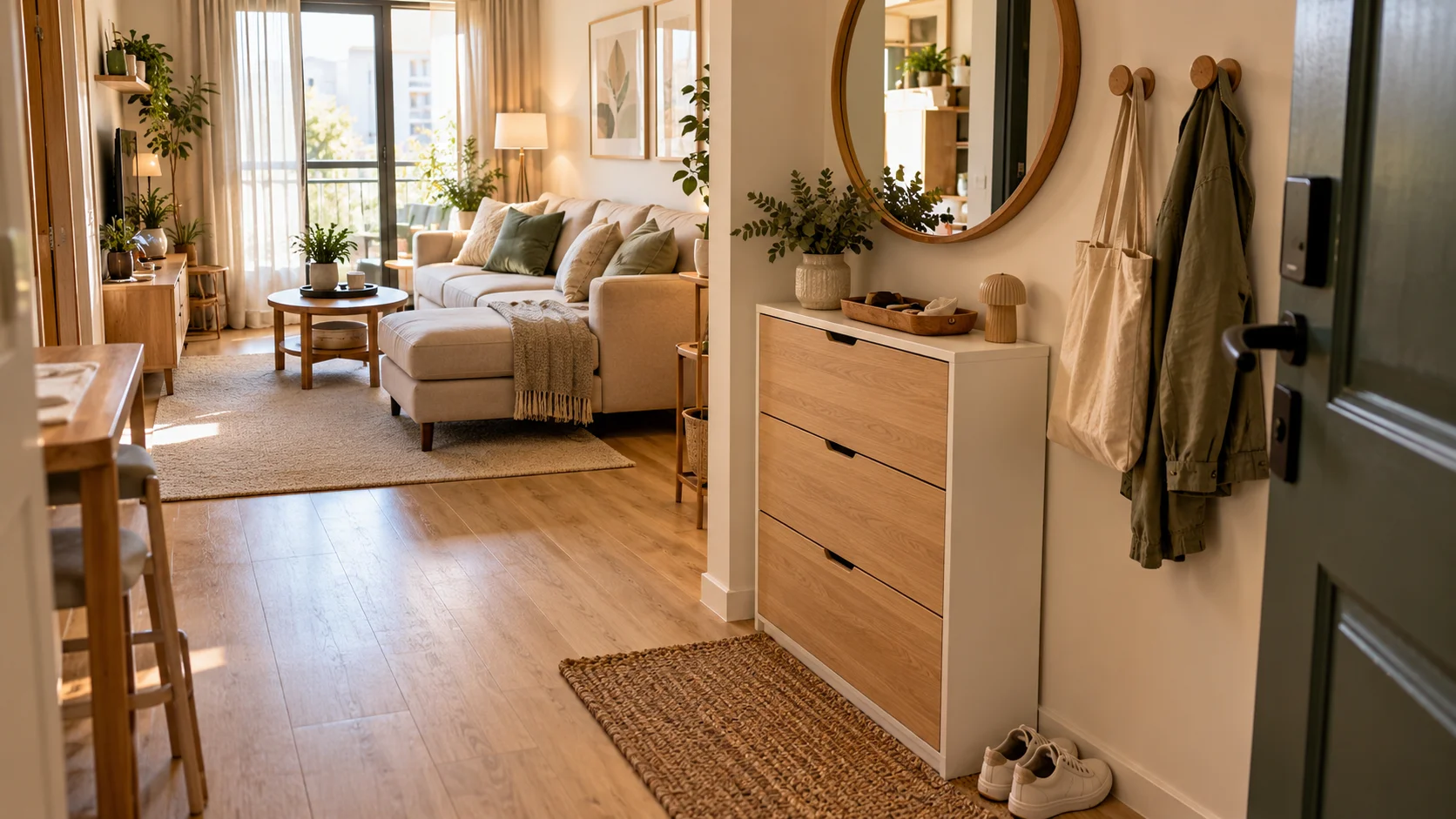
When your front door opens straight into the living room, creating a proper entryway can feel impossible. Shoes gather beside the sofa, bags land on dining chairs, keys disappear under mail, and coats end up wherever there’s an empty hook. There’s no separate foyer to contain the mess—and adding a bulky console or coat rack can make an already small apartment feel even tighter.
The good news is that you don’t need a dedicated hallway to create a functional entrance. The best small apartment entryway ideas work with the space you already have, whether that’s a narrow strip of wall, the back of the front door, an awkward corner, or a few feet between the entrance and your living area.
The key is to create a small landing zone for the things you use every day, without blocking the door or sacrificing valuable walking space. Below, you’ll find practical layouts, renter-friendly storage ideas, and simple ways to keep shoes, coats, keys, and bags from spreading throughout your home.
Quick Guide: Which Entryway Setup Works for Your Apartment?
| Your situation | Best starting point | Why it works |
|---|---|---|
| Front door opens into the living room | Small rug and wall-mounted hooks | Defines an entrance without a separate room |
| Very narrow entrance | Shallow shoe cabinet or vertical hooks | Keeps the floor as open as possible |
| No coat closet | Door-mounted organizer or compact hook rail | Uses existing vertical space |
| Shoes pile up near the door | Shoe tray and slim shoe rack | Gives everyday footwear a designated home |
| Renter who can’t drill | Suitable removable hooks and freestanding furniture | Avoids permanent changes when installed correctly |
| Studio apartment | Narrow shelf or carefully placed open divider | Creates a visual boundary between zones |
1. Create a Landing Zone Where the Front Door Opens Into the Living Room
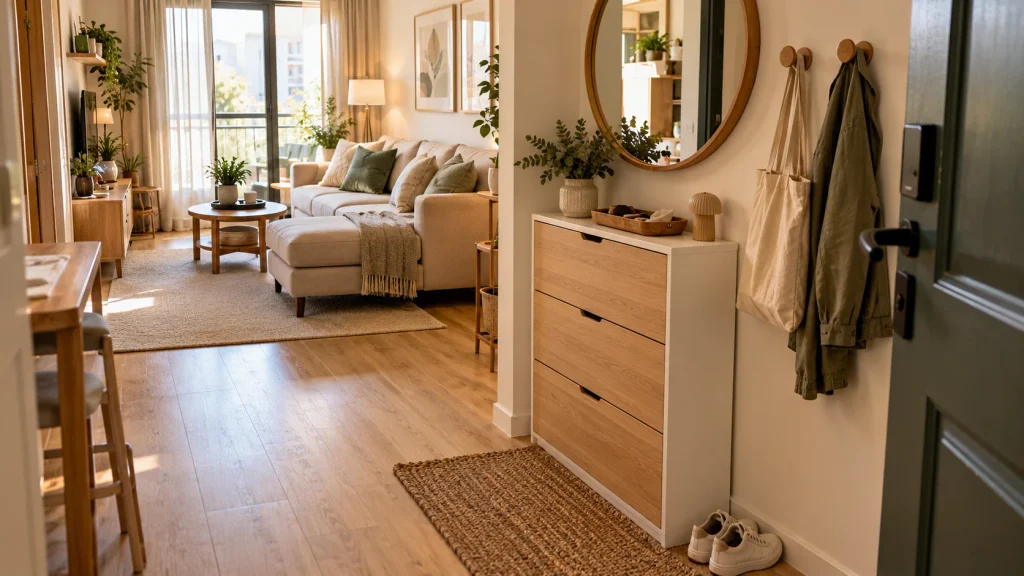
An apartment doesn’t need a separate foyer to have an entryway. It needs a clearly defined place for the items that come in and out of the home every day.
Start by looking at the wall nearest the door. If there’s enough room, a slim shoe cabinet or narrow shelf can hold keys, sunglasses, and a small everyday bag. A few hooks above it can handle a jacket or tote. A small rug can visually distinguish the entrance from the living room.
The arrangement should be compact. You don’t need a full furniture set with a bench, console, coat rack, and oversized mirror.
What to do:
- Choose one surface for keys, mail, and small essentials.
- Keep only frequently worn shoes near the door.
- Add hooks for the bag or coat you use most often.
- Use a small mat or runner to identify the entrance zone.
- Leave the route from the door into the apartment clear.
Avoid this mistake: Don’t create a drop zone that becomes another place to dump everything. Give each item a defined home and move occasional-use belongings elsewhere.
2. Use the Wall Behind or Beside the Door
When an entryway is extremely small, the wall can be more useful than the floor.
A compact hook rail can hold jackets, hats, reusable shopping bags, and keys without requiring a full coat rack. A narrow ledge or small wall shelf may provide a place for lightweight essentials, provided it’s installed safely and doesn’t interfere with the door.
Renters should check their lease and the wall surface before drilling. Removable products can be helpful, but not every adhesive is compatible with every paint finish, wallpaper, or textured surface.
How to make it work:
- Check where the door swings and where the handle lands.
- Choose a location that doesn’t interfere with opening or closing the door.
- Keep heavier items on hardware rated for their weight.
- Group hooks together rather than spreading them across several walls.
- Limit the number of items displayed so the entrance stays visually calm.
A small vertical arrangement often works better than a deep freestanding unit because it leaves more usable floor space.
Amazon shopping option: Shop Entryway Hooks on Amazon →
3. Choose a Slim Shoe Cabinet Instead of a Bulky Rack
Shoes are one of the biggest sources of entryway clutter. Even a relatively tidy apartment can look messy when several pairs sit beside the front door.
A slim shoe cabinet may be a good choice when you want footwear stored out of sight. Many designs hold shoes at an angle, allowing them to fit into a shallower unit than a conventional shelf-style rack. However, capacity depends on shoe size, cabinet design, and the number of pairs you own.
Before buying, measure the available width and depth. Check the cabinet’s external dimensions rather than relying on a product photo, and make sure doors or drawers can open without hitting the entrance door.
For a very small household, a compact open rack or shoe tray might be more practical than a cabinet.
A simple rule: Keep everyday shoes at the entrance and store seasonal or occasional footwear elsewhere.
Amazon shopping option: Find Slim Shoe Cabinets on Amazon →
4. Make a Shoe Tray Part of Your Entryway
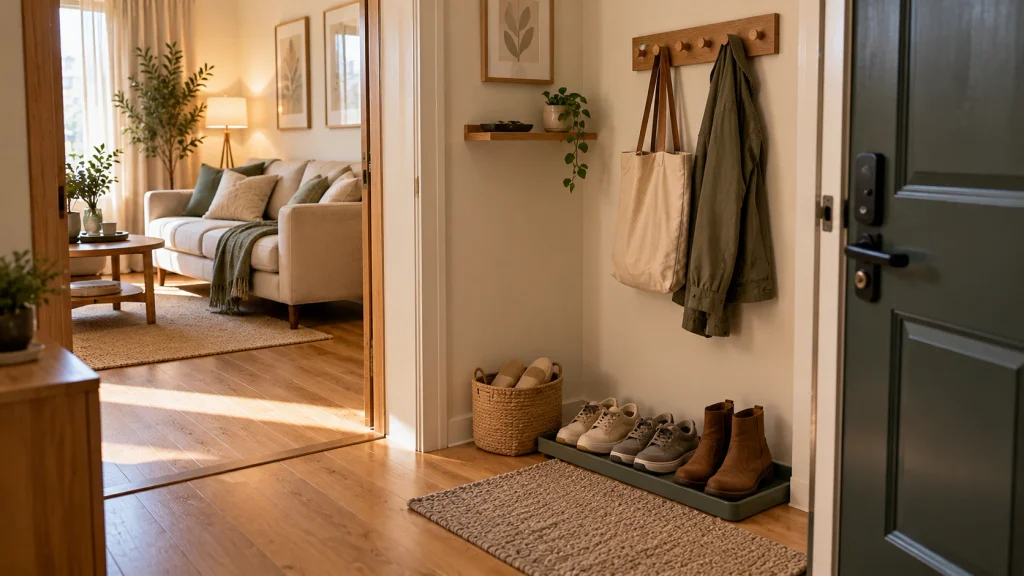
A shoe tray is one of the simplest solutions for keeping dirt and wet footwear near the door instead of carrying it into the apartment.
It doesn’t need to be decorative or expensive. Choose a tray that’s large enough for the shoes you actually wear, easy to clean, and positioned where it won’t become a tripping hazard.
If you regularly wear boots or live somewhere with wet weather, make sure the tray has enough room for bulkier footwear. A small mat in front of the door can help capture loose dirt, but it should not catch under the door or slide around as people walk over it.
For a shoes-off household, a small basket of indoor slippers can also make the routine easier for family members and guests.
Amazon shopping option: Shop Shoe Trays and Entry Mats →
5. Create an Entryway in a Studio Apartment Without Building a Wall
In a studio, the entrance may open directly into the same space used for sleeping, dining, working, and relaxing. The challenge isn’t just storage—it’s making the apartment feel organized without breaking it into too many separate zones.
A narrow open shelf, compact storage bench, or carefully positioned console can help create a subtle boundary between the entrance and the living area.
The best choice depends on the layout. A divider should not block natural light, obstruct the path from the door, or make the apartment feel like a corridor.
Try one of these approaches:
- Open shelf: Use a narrow unit with a few baskets to create a visual boundary while retaining some openness.
- Sofa positioning: If the layout allows, use the back of the sofa to distinguish the living area from the entrance.
- Rug zoning: Place a small entry mat near the door and a separate living-room rug farther inside.
- Vertical storage: Keep coats and bags on a compact wall-mounted rail instead of adding another floor-standing piece.
A studio doesn’t need more partitions just to look organized. Often, a clear route and two well-defined zones are enough.
For more ideas on making a compact home feel functional, see our guide to smart small apartment storage ideas.
6. Use the Back of the Door for Coats, Bags, and Accessories
When there’s no coat closet, the back of a suitable door can provide extra storage without taking up floor space.
Over-the-door hooks can hold lightweight jackets, hats, scarves, and everyday bags. Pocket organizers may be useful for smaller items, although they’re not always the most attractive choice for a visible front entrance.
Before installing anything, check the door’s thickness, the gap between the door and frame, and whether the organizer prevents the door from closing properly.
Keep the heaviest items within the organizer’s stated weight limit. Avoid hanging so many bags and coats that the door becomes difficult to open or the entrance looks crowded.
Best use: Store the few items you reach for daily, rather than trying to turn the door into your entire wardrobe.
Amazon shopping option: Shop Over-the-Door Organizers →
7. Add a Small Bench Only If You Have Enough Clearance
An entryway bench can be useful when you want somewhere to sit while putting on shoes. A storage bench may also hold a few pairs of footwear, reusable bags, or seasonal accessories.
But a bench isn’t essential. In a very narrow entrance, it may block the walking path or make the door feel cramped.
Before buying, measure the available depth and consider the door swing. Check whether you can sit down, stand up, and walk past the bench comfortably. If the area is too tight, a small stool that can be moved aside or no seat at all, may be the better option.
A useful compromise: Choose a narrow bench with a shelf underneath if the space allows it. Keep the shelf limited to everyday footwear rather than filling it with miscellaneous belongings.
Amazon shopping option: Find Compact Entryway Benches →
8. Give Keys, Mail, and Small Essentials One Permanent Home
Shoes and coats are visible clutter, but small items can create just as much frustration. Keys disappear, receipts accumulate, sunglasses end up on the kitchen counter, and mail travels from one surface to another.
A small tray, wall-mounted key holder, or shallow shelf can solve this problem without adding much furniture.
Choose one location close enough to the door that you’ll naturally use it when arriving home. Keep only items that genuinely belong there. Bills and important documents should have a separate place so the entryway doesn’t turn into a paper pile.
A useful setup might include:
- One hook or holder for keys
- One small tray for sunglasses or a wallet
- One designated spot for mail that needs attention
- One hook for a daily bag
The aim is to reduce the number of decisions you make when coming home. When everything has a predictable place, the entryway is easier to maintain.
Amazon shopping option: Shop Key Holders and Small Organizers →
9. Keep the Entryway Renter-Friendly
You can create a functional entrance without permanently changing the apartment. Freestanding storage, suitable over-the-door products, small rugs, and carefully selected removable hooks can all help.
The right combination depends on your lease and the surfaces available. Some adhesive products can damage paint when removed, and some wall-mounted storage needs secure installation to support its intended load.
Try these renter-friendly approaches:
- Use a freestanding shoe rack if drilling isn’t permitted.
- Choose a small tray or basket for items that would otherwise sit on the floor.
- Use over-the-door hooks where the door allows them.
- Consider removable hooks only on compatible surfaces and within their weight limits.
- Use a runner or mat to define the entrance without installing a permanent floor treatment.
Don’t assume that every product marketed as renter-friendly is damage-free. Read the installation and removal instructions before using it.
10. Make a Narrow Entryway Feel Less Crowded
A narrow entrance needs fewer, better-fitting items, not more storage furniture.
Start by protecting the main walking path. A deep console table may look attractive online but become frustrating if you have to turn sideways to pass it. A shallow shelf or wall-mounted solution may be more practical.
A mirror can reflect light and make the entrance feel more open, although it won’t create additional physical space. A light-colored wall, simple artwork, and a small rug can also help the area feel intentional without requiring extra furniture.
Try this layout:
- One slim storage piece, if the width permits
- A few hooks for everyday items
- A small shoe tray or rack
- One mirror or piece of wall art
- A clear walking route
Avoid placing a plant, umbrella stand, bench, and console in every available corner. The entrance is a transition area; it should be easy to move through.
11. Set Up a Simple Routine So Clutter Doesn’t Return
Even a well-designed entryway can become messy when too many belongings accumulate near the door.
The easiest system is one that limits what stays there. Keep the current shoes, coat, and bag you use most often near the entrance. Return occasional-use items to their regular storage areas rather than letting them collect around the door.
Try a two-minute reset at the end of the day:
- Put keys back in their holder.
- Return bags and coats to their designated hooks or closet.
- Place shoes on the rack or in the tray.
- Move mail to its proper destination.
- Clear anything that blocks the walking path.
If several people share the apartment, assign each person a small, realistic amount of space. One hook and one designated shoe area per person may work better than a large shared pile.
A good entryway should be easy to reset, not something that requires a major reorganization every weekend.
How to Choose the Right Entryway Storage
Before buying a shoe cabinet, hook rail, bench, or organizer, check these details:
| What to check | Why it matters |
|---|---|
| Available width and depth | Prevents furniture from blocking the entrance |
| Door swing and handle clearance | Keeps doors opening and closing normally |
| Storage capacity | Helps you avoid buying a unit that’s too small or too large |
| Installation requirements | Matters in rentals and on delicate surfaces |
| Weight limits | Helps prevent overloaded hooks and shelves |
| Ease of cleaning | Important near shoes and outdoor dirt |
| Daily accessibility | Everyday items should be easy to reach |
| Visual clutter | Too many open hooks and shelves can make the entrance feel busy |
Measure the space before browsing products. Then choose storage based on the belongings you actually need near the door.
If your apartment needs organization in other areas too, our guides to small apartment essentials and small living room arrangement offer more ideas for making compact spaces work better.
Frequently Asked Questions
How do you create an entryway when your apartment has no foyer?
Create a small landing zone near the front door using a shoe tray, a few hooks, and a compact shelf or cabinet if space allows. A small rug can help distinguish the entrance from the living room without building a wall.
Where should you put shoes in a small apartment with no entryway?
Start with a shoe tray or slim rack near the door. If there’s no floor space, consider a suitable over-the-door organizer or a shallow cabinet elsewhere near the entrance. Keep only frequently worn shoes close to the door and store the rest in a closet or bedroom.
How can you store coats without an entryway closet?
Use a compact hook rail, over-the-door hooks, or a small freestanding coat rack if there’s sufficient clearance. Keep only daily-use outerwear near the entrance so the area doesn’t become crowded.
How can you create an entryway in a studio apartment?
Use subtle visual zoning, such as a small rug, a narrow shelf, or a carefully positioned piece of furniture. The goal is to define the entrance without blocking natural light or the route into the apartment.
What is the best entryway furniture for a very narrow apartment entrance?
The best option depends on the measurements. A shallow shoe cabinet, compact hook rail, or small wall shelf may be more practical than a conventional console table or deep bench. Always measure the door swing and walking space first.
Are removable hooks safe for apartment walls?
They can be useful when the surface is compatible and the hooks are installed according to the manufacturer’s instructions. Check weight limits, humidity restrictions, and removal guidance. Some adhesives can still damage paint or wallpaper.
How do you keep dirt from shoes out of the living room?
Place a suitable entry mat and shoe tray near the door, keep outdoor footwear in that zone, and clean the tray regularly. Make sure the mat doesn’t slide or interfere with the door.
How do you stop a small entryway from looking cluttered?
Limit the number of items stored near the door, use a defined home for keys and mail, and keep only everyday shoes and outerwear there. Closed storage can hide visual clutter, while a clear walking path makes the entrance easier to use.
Final Thoughts
Creating an entryway in a small apartment without a foyer isn’t about squeezing a miniature mudroom into a few feet of space. It’s about giving everyday belongings a clear destination before they spread into the rest of the home.
Start with the problem you notice most: shoes by the door, coats without a home, keys that disappear, or bags left on chairs. Choose one practical solution, measure carefully, and make sure the entrance remains easy to walk through.
You may need only a shoe tray and a few hooks. A different layout might benefit from a slim cabinet or a narrow bench. The best setup is the one that fits your actual space and is easy to maintain.
A welcoming entrance doesn’t have to be large. With a little planning, even the smallest apartment can have a practical landing zone that feels tidy, comfortable, and intentional.