
Disclosure: As an Amazon Associate, Nook and Nest Living earns from qualifying purchases made through links on this page, at no extra cost to you.
Murphy Bed vs Sofa Bed: Which One Should You Actually Buy?
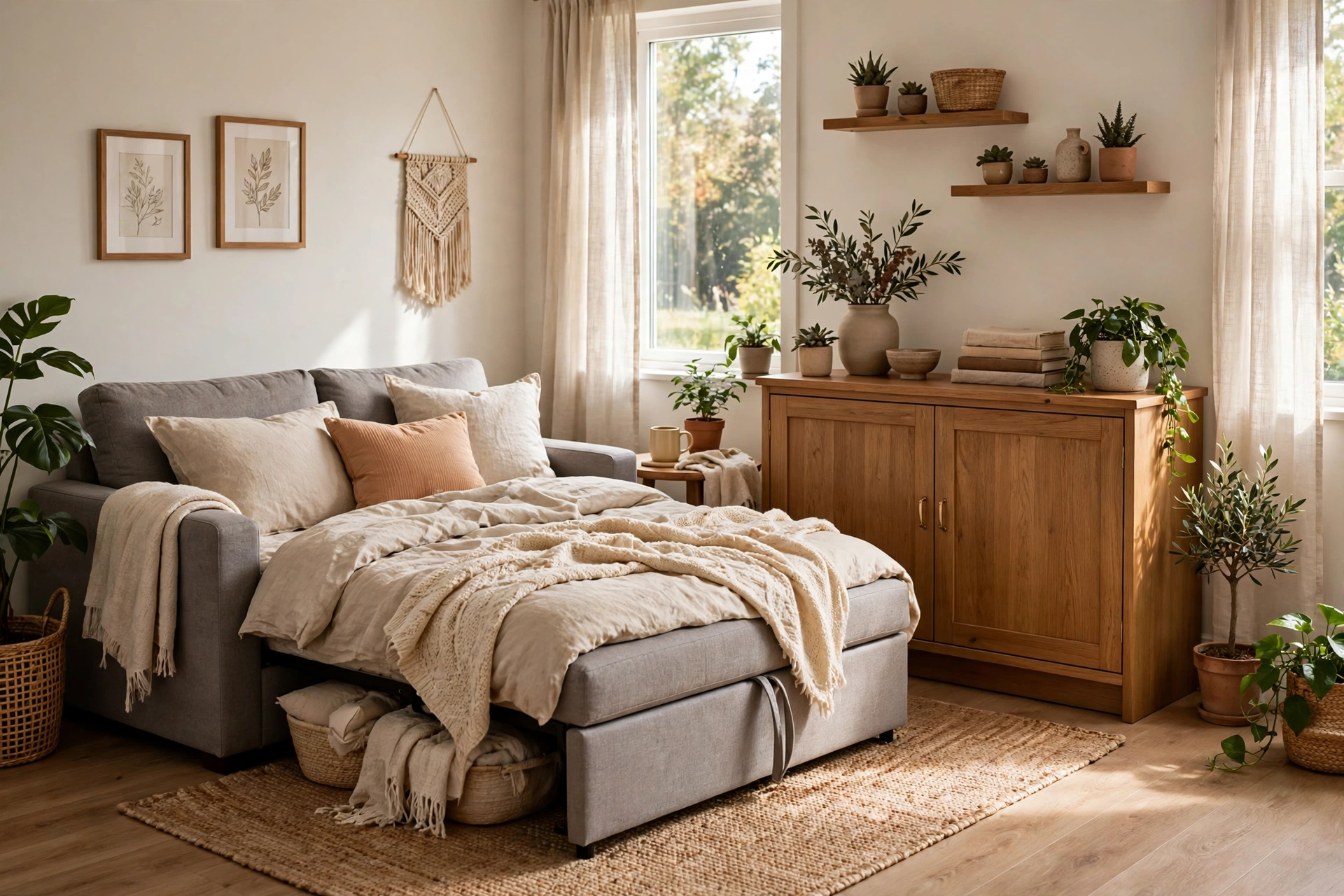
The murphy bed vs sofa bed debate comes down to one simple question: will someone sleep on it every single night, or just a few nights a month? Get that answer right and the choice almost makes itself. Get it wrong and you end up with a bed nobody wants to sleep on, or a couch nobody sits on. This guide compares both options honestly, on comfort, daily effort, lifespan, space, and cost, so you can decide with confidence.

Quick Answer
- Sleep on it every night: buy a murphy bed. It takes a real mattress, and that changes everything.
- Guests a few nights a month: a good sofa bed is fine, especially with a memory foam topper.
- You rent and cannot drill: get a freestanding cabinet bed or a sofa bed. Both avoid wall mounting.
- You need a couch every day: buy the sofa bed, period. A murphy bed gives you no seating.
- Tightest budget: a sofa bed costs roughly half as much up front as a wall murphy bed.
If you are still deciding between the two after this guide, our 12 best murphy beds for small apartments and 11 best cabinet beds for renters cover the murphy side in full detail.
Murphy Bed vs Sofa Bed: The Honest Verdict
Here is the verdict in one paragraph. A murphy bed is a real bed that hides in a wall or a cabinet. A sofa bed is a real couch that hides a thin mattress. That single difference explains almost every other difference in this guide. The murphy bed sleeps better, lasts longer under nightly use, and gives your floor back during the day. The sofa bed costs less, needs no installation, and gives you a place to sit every day. Neither one is bad. They just solve different problems, and most buyer regret comes from buying one while needing the other.
Comfort: A Real Mattress vs a Folding Mattress
Comfort is where the murphy bed vs sofa bed gap is widest, and it comes down to mattress thickness and what sits underneath it.
A murphy bed takes a standard mattress, up to 12 inches thick on models like those from Lori Beds. That is the same mattress you would put on a regular bed frame, so it sleeps like a regular bed. Cabinet beds are a middle case: they use a thinner tri-fold foam mattress, usually around 6 inches, on a solid platform with no springs or bars. That suits guests and occasional use well, and some cabinet sets offer a hybrid pocket coil upgrade built for every-night use.
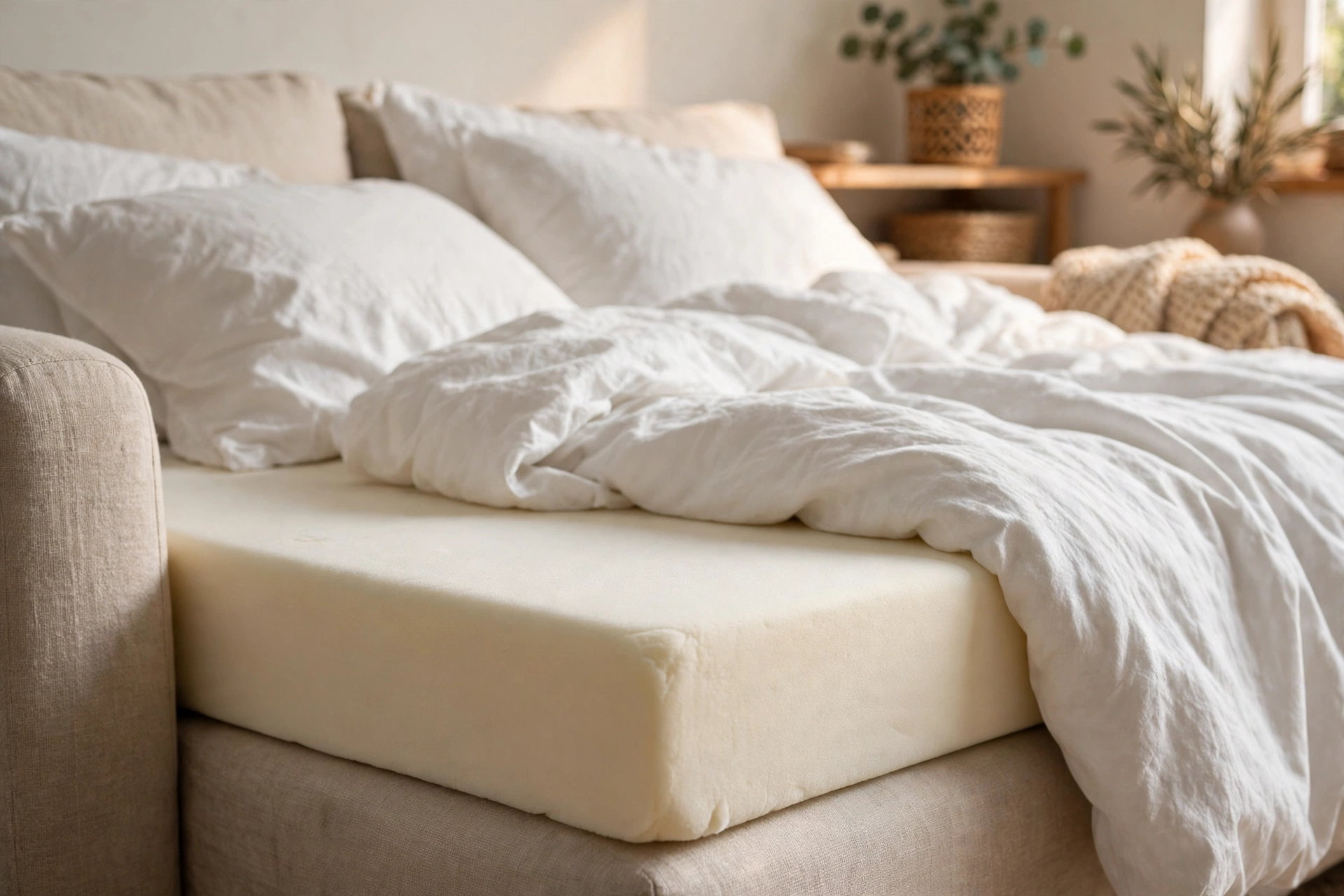
A sofa bed mattress, by contrast, is structurally capped at about 4 to 5 inches thick, because it has to fold into the sofa cavity. Then there is the famous bar-in-the-back problem. A pull-out mattress folds over a metal deck with a wire grid, and a transverse support bar typically lands right where your lower back sits. Anyone who has woken up sore on a sofa bed has felt that bar. Two real fixes exist: a folding hardwood support board laid over the bars, or a premium bar-free platform design, and a dense memory foam topper at least 3 inches thick also helps a lot.
One more comfort trap: sleeper sizes run shorter than regular beds. A sleeper queen is typically around 60 by 72 inches, not 60 by 80, so tall sleepers should check the open length before buying. And a murphy bed has one quiet advantage nobody talks about: you can leave the bedding on when you fold it away, while a sofa bed makes you remove cushions and bedding every single time.
Bottom line on comfort: nightly sleeper, murphy bed wins by a wide margin. Occasional guest, a sofa bed with a topper is genuinely acceptable.
Daily Effort: One Pull vs Cushions Everywhere
A murphy bed opens in under a minute, assisted by pistons or springs. You pull it down, and you are done. Closing it is the same motion in reverse. That is the whole routine, and it is why murphy beds work as daily beds.
A sofa bed asks for more. Remove the sofa cushions, grasp the center handle, pull the frame up and out, rest it on the middle leg, extend the second half. Closing reverses the whole sequence and ends with replacing the cushions. On a large model that is heavy, awkward work. Done once for a weekend guest, it is no big deal. Done every single night, it gets old fast, and this daily effort gap is one of the strongest practical reasons to choose a murphy bed for nightly use.
How Long Each One Lasts
A murphy bed used nightly lasts about 15 years on average. At that point the pistons or springs wear out, and that is the part to understand before you buy.
Gas pistons are smooth and quiet, but they lose pressure over time and typically need replacing every 5 to 10 years, and when one fails you replace the whole strut. Springs last longer, a quality spring system can run for decades, and individual springs can be added or removed to adjust the counterbalance if you change mattress weight. The trade-off is more noise and a heavier feel. Either way, budget for one mechanism refresh inside that 15 year life.
A sofa bed lasts roughly 7 to 15 years, and it wears twice over, because it works as both seating and bed. The cushions sag, the frame starts to squeak, and frequent folding and unfolding wears the mechanism down. A murphy bed, by contrast, only bears weight while you rest on it. So the sofa bed looks cheaper up front but its shorter, harder life narrows the gap over 20 years.
Space: What Each One Gives Back When Closed
This is the murphy bed’s second big win. A vertical queen wall bed measures about 16 inches deep when closed, under 8 square feet of floor space. A queen cabinet bed is about 23 to 26 inches deep closed. Either way, when the bed is away, the floor is yours again.
A sofa bed gives back nothing. It keeps its full sofa footprint all day, it just changes function. A typical queen sofa bed is 87 to 90 inches wide as a sofa, and opens to 80 to 90 inches deep. That said, the open footprint is roughly a tie: both options need about 80 to 90 inches of open depth, and Bestar recommends 30 to 36 inches of walking clearance around the open bed, so measure your room for the open bed, not just the closed one. If you want the full measurement rules, our guide on how much space a murphy bed needs covers vertical, horizontal, and cabinet sizes with manufacturer-verified numbers.
One honest exception: if the room must be a living room first and a bedroom second, the sofa bed wins, because it gives you seating every day while a murphy bed gives you an empty floor. Floor space and seating are different needs, and only you know which one your room is missing.
Cost: What You Pay Up Front and Over 20 Years
Sofa beds are cheaper, no way around it. The median queen sleeper sofa price is around $900, with entry models from $800 to $1,000, quality mid-range models from $1,000 to $1,800, and premium memory foam no-bar models reaching $3,000 to $4,000. Prices checked October 2026 from retailer comparison guides.
Pre-built murphy beds run a median of $2,000 to $4,000, with a basic queen including installation starting around $2,200, and professional installation adding roughly $200 to $500. There is one price surprise worth knowing: the DIY kit route. Mechanism kits run $279 to $399, and most builds come in under $1,000 total in materials plus the mattress. If you are handy, that cuts the murphy bed’s biggest disadvantage in half.
Think in cost per year, not just sticker price. A $3,500 murphy bed over 15 years is about $233 a year. A sofa bed bought twice in the same period, because it wore out faster, can cost nearly as much in total. In the murphy bed vs sofa bed cost comparison, the lifetime math matters more than the sticker price, even though the sofa bed still wins on upfront cost.
Renters, Read This Before You Choose
Wall murphy beds must be bolted to studs, which most leases class as a permanent modification. If you rent, you have two good options that need no landlord permission at all. A sofa bed needs nothing but floor space. A freestanding cabinet bed also needs no wall mounting, moves with you, and sleeps far better than a sofa bed. That cabinet bed middle path is exactly why we wrote a full guide to cabinet beds for renters. If your heart is set on a wall bed as a renter, get written permission first and agree in writing who patches the wall when you leave.
4 Sofa Beds Worth Buying in 2026
If the sofa bed side won your decision, these four are verified Amazon US listings. Prices and ratings change too fast to print reliably, so use the price-check links to see the live offer before you buy.
1. LINSY 54 Inch Pull Out Sleeper Sofa Bed
A 3-in-1 convertible loveseat in corduroy blue that works as a sofa, a chaise, and a bed, with a charging station and a cup holder built in. At 53.8 inches wide it suits one sleeper or a snug two, and its 660 lb capacity is generous for its size. Check the current price of the LINSY pull out sofa bed on Amazon.
2. Amazon Basics Futon Sofa Bed in Dark Grey Linen
A convertible memory foam futon, not a pull-out with a separate mattress, so judge it as a futon: the back folds down flat, the memory foam does the comfort work, and the 71.5 inch width sleeps two in a pinch. Check the current price of the Amazon Basics futon sofa bed on Amazon.
3. Novogratz Brittany Sleeper Sofa, Twin
A classic twin sleeper sofa in blue linen, 54 inches wide, with an included twin mattress. Twin sleepers are the smart pick for a single guest room or a studio corner, because they leave you more living room than a queen sleeper does. Check the current price of the Novogratz Brittany sleeper sofa on Amazon.
4. Urhanherry 55 Inch Convertible Folding Sofa Bed
A folding sofa bed in grey chenille with a 6 inch cushion and mattress, inner springs, and a 600 lb capacity. Its sleeping surface runs a generous 88.2 inches long, which tall guests will appreciate. Check the current price of the Urhanherry folding sofa bed on Amazon.
And if you want a bed with a desk built in, so the room works as an office by day, our murphy beds with a desk guide covers the stay-level desks you never have to clear.
Murphy Bed vs Sofa Bed FAQs
Which is better for everyday sleep, a murphy bed or a sofa bed?
A murphy bed, without question. It supports a standard mattress up to 12 inches thick, while a sofa bed mattress is capped around 4 to 5 inches and folds over a support bar. For nightly sleep the murphy bed is the only one of the two that sleeps like a real bed.
Is a sofa bed cheaper than a murphy bed?
Yes, generally about half the upfront cost at the median, around $900 versus $2,000 to $4,000. But a murphy bed lasts longer under nightly use, so the lifetime cost gap is smaller than the sticker gap.
Can I install a murphy bed myself?
Some are DIY friendly, especially cabinet beds that need no mounting and mechanism kits for handy builders. Wall-mounted models are heavy and must anchor to studs, so professional installation is recommended for those.
Are sofa beds comfortable for every night?
Most are not. The thin folding mattress and the bar under your back make them fine for guests but tiring night after night. A dense memory foam topper and a support board improve them a lot, but they still do not match a real mattress.
Is a murphy bed worth it compared with a pull-out couch?
Worth it when the room must work as a real bedroom, especially nightly. Not worth it if the space needs to be a living room first, because a murphy bed gives you floor space but no seating.
Do murphy beds damage walls?
Wall models bolt to studs, so they leave mounting holes that need patching when removed, but a properly installed bed does not damage the wall structure. Cabinet beds avoid the question entirely since they stand free.
Final Thoughts: Murphy Bed vs Sofa Bed
The murphy bed vs sofa bed decision is really a lifestyle decision. Sleep on it every night, and buy the murphy bed, your back will thank you for 15 years. Host guests a few nights a month and need a couch every day, and buy the sofa bed with a good topper. Rent and cannot drill but still want a real bed, and split the difference with a cabinet bed. Whichever side you land on, measure the open bed, not just the closed one, and buy the mattress quality your sleep actually deserves.