
Disclosure: As an Amazon Associate, Nook & Nest Living earns from qualifying purchases made through links on this page, at no extra cost to you. Prices change often, so check the current price on Amazon before you buy.
Small Home Office Corner Ideas for Apartments With No Spare Room

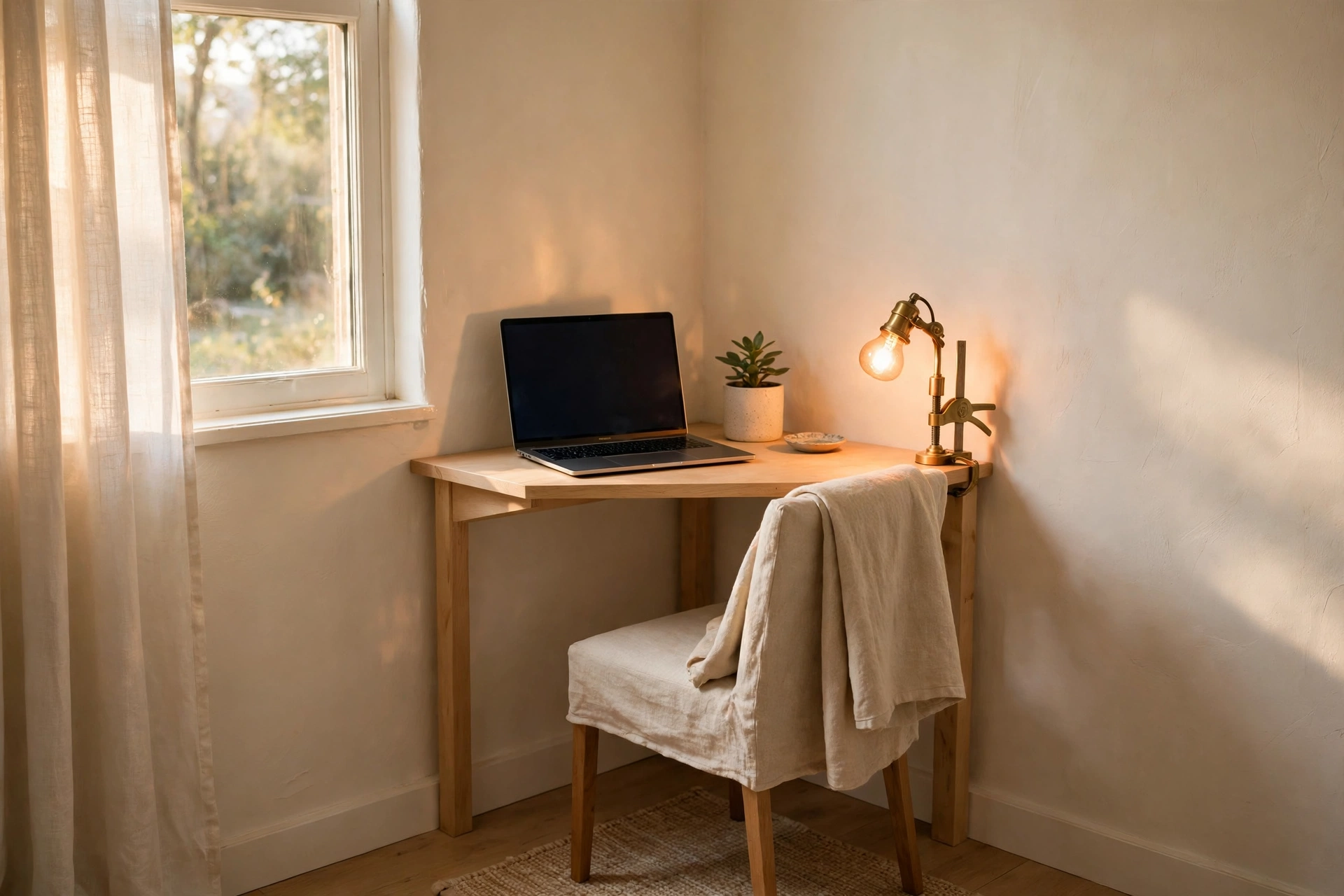
These small home office corner ideas are built for apartments with no spare room, where the office has to fit into one corner and still disappear after work. Most corner office lists start with pretty desks. This one starts with your chair, because the chair is what decides whether the corner actually works or whether you end up working from the sofa with a sore back by week two.
If you work from home in a small apartment, you already know the real problem. It is not finding a desk. It is finding a corner where you can sit for eight hours, roll your chair back, stand up without hitting the bed, see your screen without hunching, and then stop seeing work when the day ends. Get those five things right and almost any desk will do. Get them wrong and the most beautiful desk in the world will still be a bad office.
Small Home Office Corner Ideas Start With the Chair, Not the Desk
Here is the mistake almost everyone makes: they buy the desk first. They measure the wall, order a desk that fits the wall exactly, and only then discover that the chair does not roll back far enough, or that standing up means squeezing past the bed, or that their knees hit the wall every time they push in. The desk fit. The office did not.
Flip the order. Pick the chair position first, then buy a desk that serves it. Before you spend anything, run this four part corner test on the corner you have in mind:
- Chair clearance. Sit in a chair in that corner, push back, and stand up. You need open floor to roll out and stand without hitting the bed, the wall, or a door swing. This is the most forgotten dimension in small offices, and it is the one that hurts daily.
- Screen distance. Your eyes should sit about 20 to 40 inches from the screen, with the center of the screen about 15 to 20 degrees below eye level. If the corner is too shallow for that distance, a monitor will always feel too close.
- Light. You need light on your work, not behind your screen. A corner next to a window works when the light comes from the side. A corner facing a bright window will leave you squinting at a washed out screen all afternoon.
- Off-clock reset. Can you make the office disappear in about two minutes? If the answer is no, the corner will slowly take over the room, and the room will stop feeling like home.
If a corner fails the chair test, it is not your office corner. Try the next one. The right corner passes all four before you buy a single thing.
Measure Your Corner Before You Buy Anything
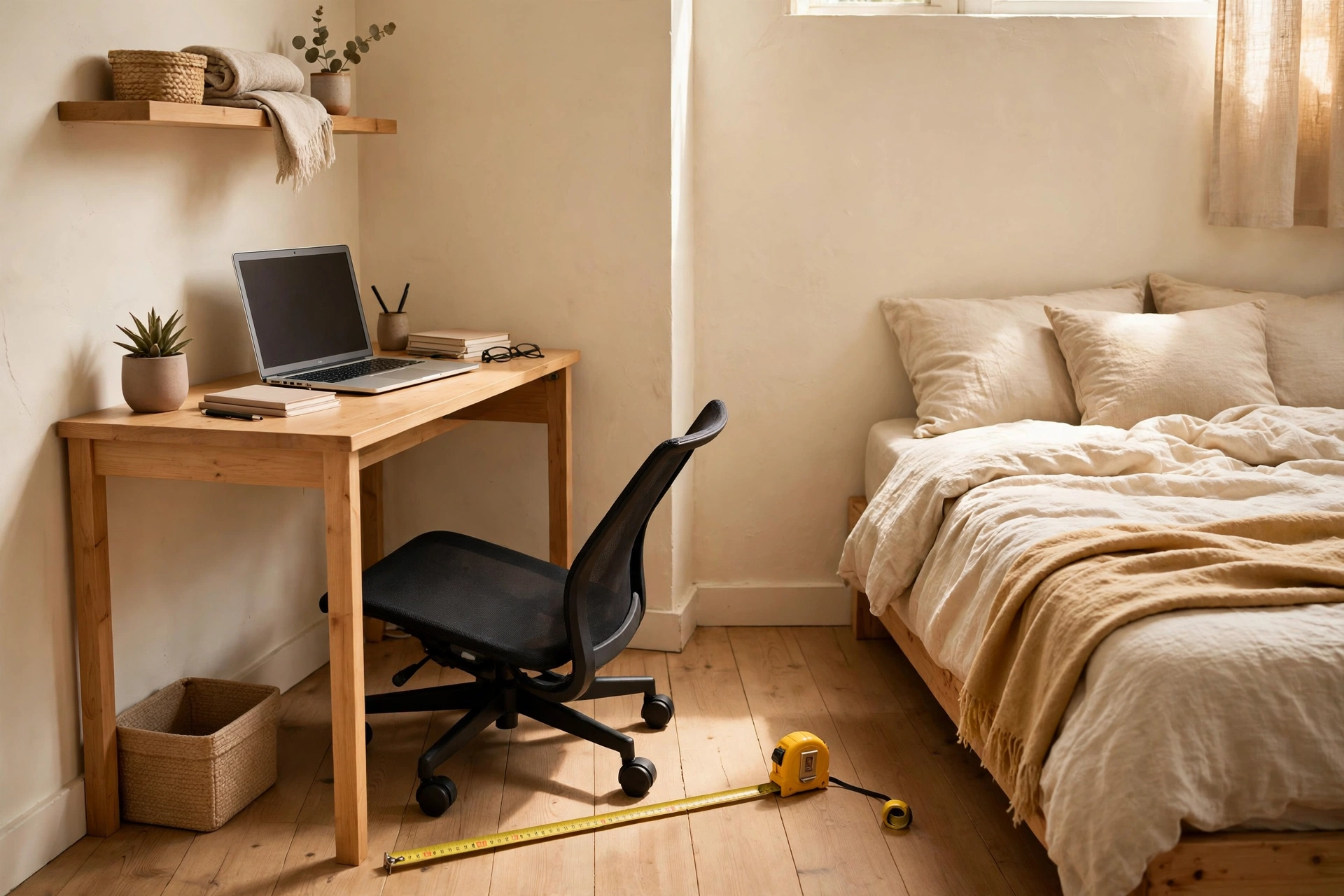
Grab a tape measure and take five numbers. Width of the corner from wall to wall, depth from the wall to where the back of your chair will end up, height from the floor to the window sill if the desk will sit under a window, distance to the nearest outlet, and the arc of any door that swings near the corner. Write them on your phone. Every desk, chair, and shelf decision below runs through these five numbers.
Three measurements matter more than the rest. First, legroom: you want at least 20 inches of clear space under the desk for your legs, with no drawer box or crossbar in the way. Second, the sweep zone: for an L shaped desk, leave about 30 to 36 inches of clear floor in front of each wing so the chair can move and you can get in and out. Third, desk height: most adults are comfortable with a desk surface about 28 to 30 inches above the floor, so a desk much taller or shorter than that will push your shoulders up or your wrists down all day.
Context helps here. The median new apartment built for rent in the US is around 1,000 square feet, and more than 44 million homes in the US are rented, which means most readers of this guide cannot knock down a wall or drill freely. Space is the constraint, and the lease is the second constraint. Both shape every pick below. A routine-first planning guide from Small Space Logic makes the same point from the other direction: plan the work routine first, then buy furniture to serve it, with chair and light before desk and storage.
Pick the Desk by Depth, Not by Looks
Desk shopping usually starts with color and style. For a corner, start with depth, because depth decides what can actually sit on the desk.
- Under 20 inches deep: laptop only. A laptop and a coffee mug fit. A monitor, a notebook, and a keyboard do not, at least not comfortably.
- 20 to 24 inches deep: laptop plus notebook, or a small monitor with a compact keyboard. This is the sweet spot for most apartment corners, and it is where most of the desks in this guide sit.
- 24 to 30 inches deep: monitor plus keyboard with room to spare, plus a notebook or a small plant. Great if your corner allows it, but check the chair clearance first, because every extra inch of depth is an inch less of rollback space.
Width follows the same logic. A 40 inch straight desk fits most corners and leaves room for the chair to slide in. An L shaped desk wants about 42 to 48 inches per side to work in a room around 9 by 9 feet. Go up to 54 to 60 inches per side and you really need a room of 10 by 12 feet or more, or the sweep zone eats the whole room. A straight desk in a corner leaves a dead triangle behind it, which is fine if you use that triangle for a cable tray or a small shelf. An L shaped desk uses both walls, but it also claims floor on both sides, so measure twice.
One more honest note. A fold-down wall desk looks clever in photos, but it is an occasional use desk. It works for an hour of emails, not for a full workday, and it needs wall mounting, which most renters cannot do. This guide is about a real desk and a real chair for daily full time work. If what you actually want is a bed that folds down into a desk, that is a different product entirely, and our guide to Murphy beds with desks covers it properly.
The Chair Is the Whole Office
You will spend more hours touching the chair than any other thing in the corner, so this is where cheap costs the most. Two rules carry the whole section.
First, go armless in a small corner. Armrests look comfortable, but in a tight corner they catch on the desk edge, stop the chair from sliding fully under the desk, and steal the walkway every time you get up. An armless chair slides all the way under, which frees floor space and makes the off-clock reset easy. Save the big armchair for a room that has space for it.
Second, match seat height to desk height. With a desk surface at 28 to 30 inches, your seat should let your feet rest flat on the floor with your knees roughly level. If raising the chair leaves your feet dangling, add a footrest rather than sitting on tiptoe all day. If you sit for long hours, a slight recline of about 100 to 110 degrees beats sitting bolt upright, and a breathable mesh back beats a sweaty one in a warm room, while wipe-clean PU leather wins if you eat lunch at the desk.
Before you buy, check the chair’s footprint, not just its seat. A chair that measures about 24 inches square tucks into most corners. A wide task chair with a big five star base needs more floor than the listing photo suggests, and that extra floor comes straight out of your rollback space.
Screen, Light, and Sound in a Corner
Three small upgrades fix most corner office complaints, and none of them needs a drill.
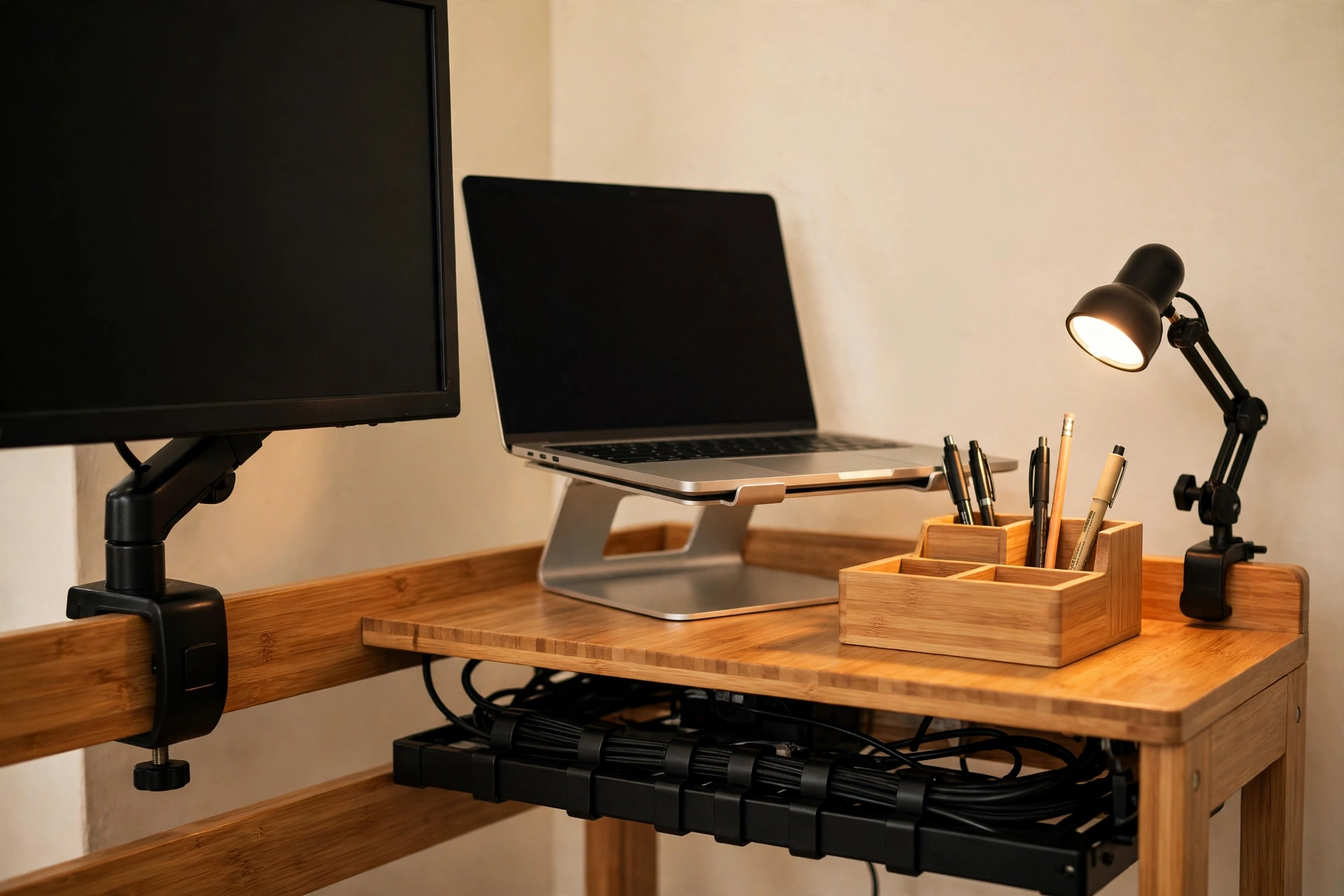
Screen. A monitor arm is the single best space buy for a corner desk. It lifts the screen off the desk, frees the footprint the stand used to eat, and lets you push the screen back to that 20 to 40 inch distance even on a shallow desk. A laptop worker gets the same win from a laptop stand, which raises the screen toward eye level, but pair it with an external keyboard and mouse, because typing on a raised laptop wrecks your wrists.
Light. A clamp lamp is the corner worker’s best friend. It grips the desk edge, so it costs zero desk surface, and a gooseneck lets you aim light at the keyboard without throwing glare on the screen. Pick one with adjustable color temperature: bright white for focused work, warm light for evening wind-down. And if your corner has only one outlet, a clamp lamp with a built-in power strip solves the outlet problem and the light problem in one purchase.
Sound. Here is the honest part. In a survey of more than 62,000 office occupants, acoustics were the top complaint, at 54 percent. A corner in a shared apartment is no different: housemates, TV, kitchen noise. A folding divider gives you visual privacy, but it does not block sound, and no honest guide should claim it does. For calls, a headset with a noise cancelling microphone does the real work, because it cleans up your voice for the other person even when the room is noisy. For focus, the same headset with the mic muted turns the corner into a quiet bubble.
The Renter Ladder: No Holes, No Landlord Fight
Every pick in this guide passes a renter test, and the test is a ladder. Start at the top and only go down a rung when you must.
- Freestanding. Desks, chairs, shelves, and dividers that stand on their own. Always allowed, always removable, always the first choice.
- Clamp-on. Monitor arms, clamp lamps, and clamp cable trays that grip the desk edge. No holes, no marks if the clamp has pads, and they come off in seconds at move-out.
- Adhesive, light only. Cable channels and small hooks on clean, smooth surfaces. Keep the load light, under about 5 lb, and never trust adhesive for anything heavy or anything above your head.
- Wall-mounted, only with studs. This is the last rung, not the first. A wall-mounted desk or shelf needs a load-bearing stud, and many modern apartments have metal studs that hold far less than wood, while drywall alone will fail under a loaded desk. If you cannot confirm a stud, do not mount it.
The ladder is also why this guide skips wall-mounted desks entirely. Everything below is freestanding or clamp-on, so your deposit stays safe. An ergonomic guide to corner desks from Eureka Ergonomic backs the same warning: check the studs before you mount anything, and use a monitor arm to reclaim space instead of drilling new holes.
Three Corner Setups That Actually Work
Setups beat shopping lists, because a setup tells you what goes where. Pick the one that matches how many hours you work and how much corner you have.
Setup A: The laptop ledge, about 2 feet wide. For part-time work, students, and anyone who mainly uses a laptop. A small straight desk, a laptop stand, a clamp lamp, and an armless chair that slides fully under. The whole office is about the width of a bookshelf, and it vanishes when the chair slides in. Keep gear in one basket so the ledge never grows into a dumping ground.
Setup B: The 42 to 48 inch corner desk. For full-time work. An L shaped desk in the corner, a monitor on an arm, a clamp cable tray underneath, a corner shelf for books and gear, and an armless chair with real rollback space. This is the setup that supports eight hours a day without a sore neck, and it is the setup most of the picks below are chosen for.
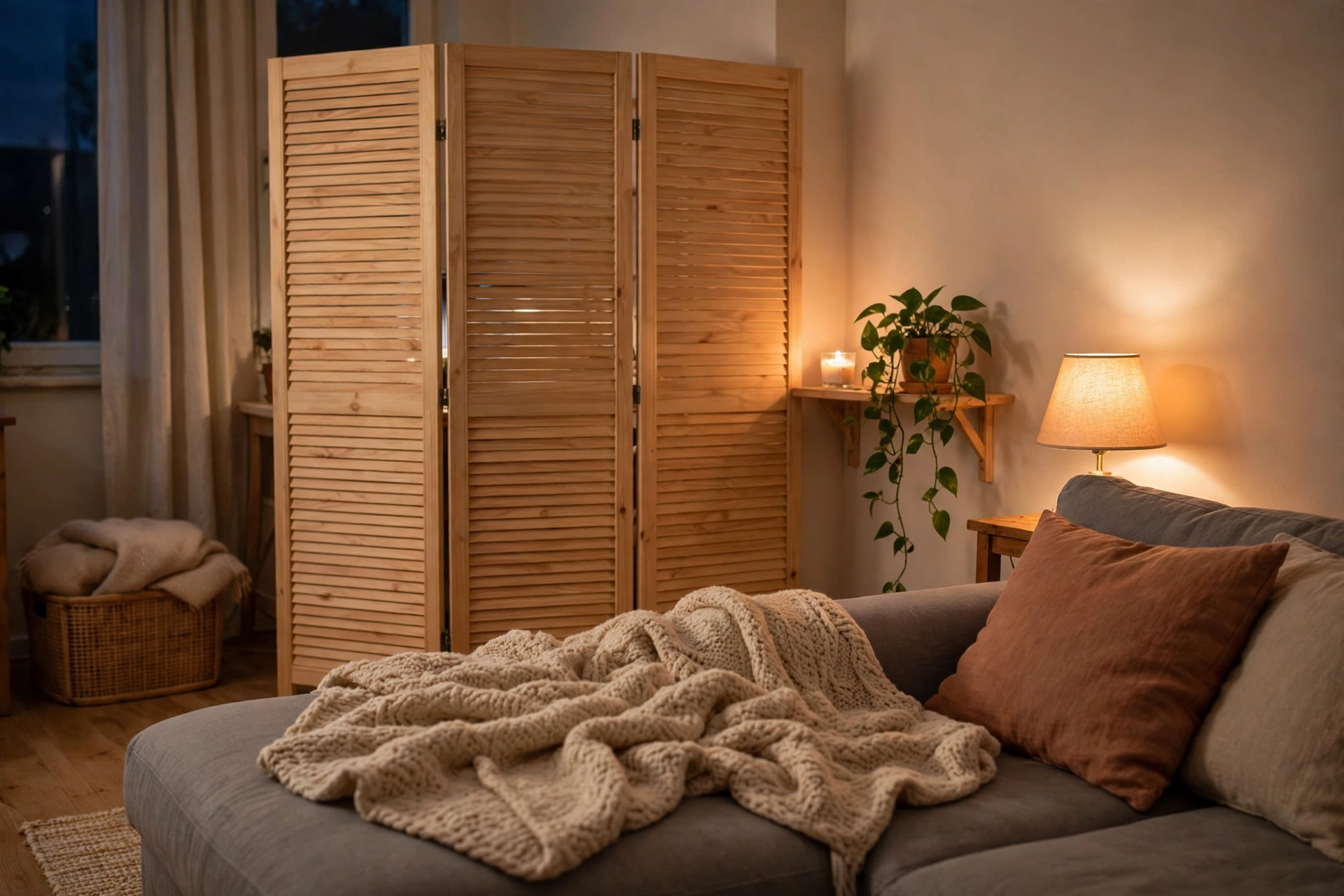
Setup C: The living room camouflage. For corners in the main living space, where the office shares a room with the sofa. A desk that looks like furniture, a folding divider that hides it after work, a plant on the corner shelf, and warm light instead of office white. Guests should not be able to tell where the office is. That is the whole point.
Whichever setup you pick, the same small home office corner ideas rule applies: the corner has to work for your body first and look good second. A beautiful corner you cannot sit in for more than an hour is not an office, it is a photo.
The Off-Clock Rule: Make the Office Disappear at 6 PM
In a small apartment, your office is also your living room, your bedroom, or both. If work stays visible after hours, rest never properly starts, and that slow bleed is what makes work-from-home corners feel exhausting even on easy days.
So build a two minute shutdown ritual into the corner itself. Close the laptop or push the monitor arm back. Slide the chair fully under the desk. Drop notebooks and chargers into one basket or one drawer. If the corner is in the living room, unfold the divider. Done. The room is a living room again.
If the corner is currently buried under clutter rather than work, fix that first, because no desk setup survives a cluttered corner. Our guide to decluttering a small apartment walks through the same room corner by corner. And if your corner sits near the front door rather than in a living room, the same hide-it logic from our small entryway organization ideas applies: one basket, one rule for what lives there, and nothing that creeps.
12 Picks for a Small Home Office Corner
Every pick below is freestanding or clamp-on, fits the depth and width rules above, and is linked for a price check on Amazon. No prices are printed here because they change often. If a pick is out of stock or shows no offer when you check, the next pick in the same group is a fine swap, because the sizes and the logic stay the same.
| Pick | Why it fits a corner |
|---|---|
| Sweetcrispy 40 Inch Computer Desk | 40 by 24 inch top, 2 drawers, headphone hook, 29.72 inch height |
| Pamray 43 Inch L Shaped Desk | Corner shape with reversible side shelves, 29.53 inch height |
| CLATINA Armless PU Leather Chair | 23.62 inch square footprint, slides fully under the desk |
| CLATINA Armless Mesh Chair | Breathable mesh back, height range 35.43 to 37.37 inches |
| Amazon Basics Gas Spring Monitor Arm | Holds 15 to 27 inch screens, clamp fits desks 0.39 to 4 inches thick |
| Lamicall Adjustable Laptop Stand | Aluminum, foldable, fits laptops 10 to 17.3 inches |
| TROND Clamp Lamp with Power Strip | Clamp mount, gooseneck, 4 outlets, zero desk surface used |
| YECAYE Clamp Under Desk Cable Tray | F-clamp mount, no drilling, fits desks 0.2 to 1.85 inches thick |
| Sorbus Bamboo Desk Organizer | 2 shelves plus 2 drawers, fully assembled, small footprint |
| Baveke 5 Tier Corner Bookshelf | L shaped, fits a 40 by 40 cm corner, freestanding |
| FDW 4 Panel Folding Room Divider | Freestanding, folds flat, hides the office after work |
| LEVN Wireless Headset with Mic | AI noise cancelling mic, 50 hours talk time, USB dongle included |
1. Sweetcrispy 40 Inch Computer Desk
The straight desk pick. At 40 by 24 inches with a 29.72 inch height, it sits right in the depth sweet spot: room for a monitor and keyboard, or a laptop plus notebook, without eating the rollback space behind you. Two drawers swallow chargers and notebooks, and the headphone hook keeps the headset off the desk. Check the current price on Amazon for the Sweetcrispy 40 inch desk.
2. Pamray 43 Inch L Shaped Desk
The corner desk pick. The L shape uses both walls, the side shelves are reversible so the desk works in a left or right corner, and at 29.53 inches high it matches standard chair heights. This is the desk for Setup B, the full-time corner office. Check the current price on Amazon for the Pamray 43 inch L shaped desk.
3. CLATINA Armless PU Leather Chair
The tuck-under chair. With a 23.62 inch square footprint and a height range of 31.89 to 35.83 inches, it slides fully under either desk above, which is what makes the off-clock reset possible. The low back gives lumbar support without towering over the desk, and PU leather wipes clean. Check the current price on Amazon for the CLATINA armless PU leather chair.
4. CLATINA Armless Mesh Chair
The warm-room chair. Same armless, tuck-under idea, but with a breathable mesh back for long sessions in a warm apartment, a height range of 35.43 to 37.37 inches, and a gas lift rated to 400 lb. Pick this one if you run hot or sit for eight hours straight. Check the current price on Amazon for the CLATINA armless mesh chair.
5. Amazon Basics Gas Spring Monitor Arm
The space buy. It holds screens from 15 to 27 inches and 4.4 to 15.4 lb, clamps onto desks 0.39 to 4 inches thick with no drilling, and extends about 20.5 inches so you can set the screen at the right distance even on a shallow desk. The gas spring lets you adjust height with one hand. Check the current price on Amazon for the Amazon Basics gas spring monitor arm.
6. Lamicall Adjustable Laptop Stand
The laptop worker’s monitor arm. Aluminum, foldable, fits laptops from 10 to 17.3 inches, and lifts the screen toward eye level so you stop hunching over a flat laptop. Fold it flat and slide it in a drawer at 6 PM and the desk is a normal table again. Pair it with an external keyboard. Check the current price on Amazon for the Lamicall adjustable laptop stand.
7. TROND Clamp Lamp with Power Strip
The two-problem pick. The clamp grips the desk edge and costs zero surface, the gooseneck reaches about 23.62 inches so you can aim light exactly where you need it, and it offers 3 color temperatures with 5 brightness levels. The built-in power strip adds 4 outlets on a 6 ft cord, which solves the one-outlet corner problem at the same time. Check the current price on Amazon for the TROND clamp lamp with power strip.
8. YECAYE Clamp Under Desk Cable Tray
The no-drill cable fix. An F-clamp mount grips desks from 0.2 to 1.85 inches thick, the dual bar design holds a power strip on one bar and cables on the other, and hook-and-loop straps keep everything in place. No screws, no adhesive, no landlord conversation. Check the current price on Amazon for the YECAYE clamp under desk cable tray.
9. Sorbus Bamboo Desk Organizer
The small footprint organizer. At about 11.87 by 7.75 by 8.25 inches with 2 shelves and 2 drawers, it holds pens, notebooks, and small supplies without claiming a quarter of the desk, and it arrives fully assembled. If your desk is 40 inches wide, this is about the biggest organizer it can take without crowding the keyboard. For bigger storage needs, our best storage products for small apartments covers the rest of the room. Check the current price on Amazon for the Sorbus bamboo desk organizer.
10. Baveke 5 Tier Corner Bookshelf
The vertical storage pick. L shaped to hug a 90 degree corner, it occupies only about 40 by 40 cm of floor while giving five tiers of storage, and it is freestanding with a 15 lb limit per shelf. Park it beside the desk for books, reference binders, and a plant, and keep the desk itself clear for work. Check the current price on Amazon for the Baveke 5 tier corner bookshelf.
11. FDW 4 Panel Folding Room Divider
The off-clock pick. Four panels, about 63 inches wide and 68.9 inches tall when open, freestanding, and it folds flat for storage. Unfold it in front of the desk at 6 PM and the office is gone; fold it away in the morning and the corner is back. It gives visual privacy, not soundproofing, and that honest limit is exactly why the headset is also on this list. Check the current price on Amazon for the FDW 4 panel folding room divider.
12. LEVN Wireless Headset with Mic
The calls pick. A single-ear wireless headset with an AI noise cancelling microphone, so your voice stays clear on calls even when the apartment is not quiet, plus Bluetooth 5.3 and a USB dongle for a stable connection to a laptop without Bluetooth. About 50 hours of talk time means charging is a weekly job, not a daily one. Check the current price on Amazon for the LEVN wireless headset with mic.
Frequently Asked Questions
What size desk fits in an apartment corner?
A 40 inch straight desk fits most corners, and an L shaped desk wants about 42 to 48 inches per side. Measure the chair rollback space first, then pick the desk width that leaves it intact, because a desk that fits the wall but leaves no room to stand up is the wrong desk.
Can I work full time from a corner desk?
Yes, if it is a real desk and a real chair. A desk 20 to 30 inches deep, a chair that lets your feet rest flat, a screen at 20 to 40 inches, and a monitor arm or laptop stand will carry eight hours a day. A fold-down wall desk or a dining chair will not, no matter how nice they look.
How much space do I need behind my chair?
Enough to roll back and stand up without hitting anything, plus about 30 to 36 inches of clear floor in front of each wing if you use an L shaped desk. Test it with a real chair before you order, because this number decides the whole setup.
How do I set up a home office in a rental without drilling?
Follow the renter ladder: freestanding furniture first, clamp-on gear second, light adhesive only for cables and small items, and wall mounting only if you can confirm a real stud. Every pick in this guide is freestanding or clamp-on, so nothing here needs a drill.
What are the best small home office corner ideas for a bedroom corner?
The best small home office corner ideas for a bedroom corner are the ones that protect sleep: a desk that faces the wall rather than the bed, an armless chair that slides fully under the desk, a divider or a closed laptop that hides work at night, and warm light instead of office white after hours. If you can still see your inbox from the pillow, the corner is not finished.
Should my corner desk face the wall or the room?
Face the wall. Facing the room puts the sofa, the TV, and everyone walking past in your line of sight, which is a distraction machine. Facing the wall with light coming from the side gives you focus and fewer reflections on the screen.
How do I hide my office after work?
Build a two minute ritual: close the laptop or push the monitor arm back, slide the chair under the desk, drop loose gear into one basket, and unfold a divider if the corner is in the living room. The goal is a room that looks like a living room again, not a room with an office hiding in it.
Final Thoughts
Small home office corner ideas work when they respect the order that matters: chair first, measurements second, desk third, and a shutdown ritual that protects the rest of your home. Skip the pretty desk that fails the chair test, skip the wall mount your lease cannot support, and spend the money where your body actually feels it, on the chair, the screen height, and the light. Do that, and one corner of a small apartment is genuinely enough for full-time work, without the apartment stopping feeling like home.